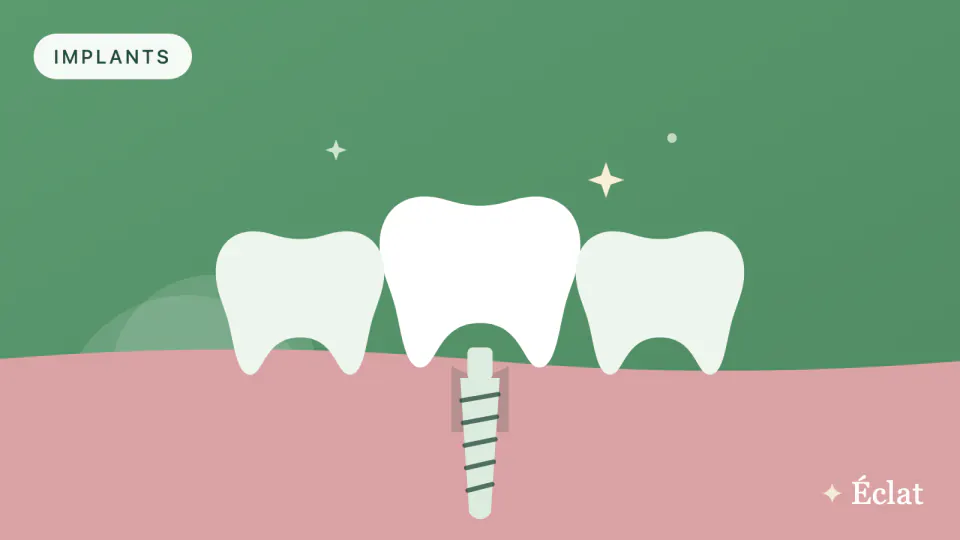
Dental Implants Near Atherton: Candidacy, Timeline & Care
· Eclat Dental Studio
Who qualifies for a dental implant, how long the process takes, and what 2025 research says about keeping implants healthy for the long run. For Atherton patients.
Opening soon: Eclat Dental Studio’s estimated grand opening is February 1, 2027.
Many adults with enough jawbone and healthy gums can be considered for a dental implant, though only an in-person evaluation can determine whether you are a candidate. The process usually runs about 3 to 9 months from implant placement to final crown, plus several additional months of healing first if bone grafting is needed. Research suggests long-term implant health depends on planning, bone, gum health and regular maintenance, not just the surgery itself.
These are questions patients often ask when weighing a missing tooth or a failing bridge. The sections below cover candidacy, timing, and what the newest evidence says about long-term care.
Who is a good candidate for a dental implant?
Candidacy comes down to a few practical questions. A dentist will typically look at three things.
- Bone: There needs to be enough healthy jawbone to anchor the implant. When bone has been lost, a graft can often rebuild it first.
- Gum health: Active or untreated gum disease is a reason to treat the gums before placing an implant.
- General health and habits: Unmanaged diabetes and tobacco use can interfere with healing. Certain medications and medical conditions can also affect healing and implant success, so be sure to share your full health history. Age alone is not the deciding factor, but jaw growth should be complete.
Only an in-person evaluation can determine whether an implant is right for you. At our Mountain View office, a consultation typically includes a review of your medical history and appropriate imaging, which may include 3D imaging, so bone volume and anatomy can be assessed before any treatment is recommended.
What does the implant timeline look like?
Every case is different, but the general sequence is consistent:
- Planning and imaging: Your dentist assesses bone, gums and bite, and treats any active gum disease or decay first.
- Bone grafting, if needed: A small graft can take at least three months to heal, and larger ones can take considerably longer.
- Implant placement: Initial recovery is usually about a week, with mild swelling and soreness that many people manage with over-the-counter pain relievers.
- Integration: The bone gradually bonds to the implant over roughly 3 to 9 months.
- Final restoration: A connector post and the permanent crown, bridge or denture are attached once healing allows.
Some selected cases can have teeth placed on the same day as the implant, but that depends on bone quality and your overall situation. A dentist can tell you whether it is realistic for you. Because treatment often involves several shorter follow-up visits, it helps to plan your schedule with your care team in advance.
What does new research say about long-term implant health?
A large 2025 review pooled data from 102 studies covering roughly 13,000 patients. It found that about 46% of implant patients had peri-implant mucositis, which is inflammation of the gum tissue around an implant. About 21% had peri-implantitis, a more serious condition that also involves bone loss around the implant.
These numbers do not mean implants routinely fail. They show that the tissue around an implant needs ongoing attention, much like natural teeth do. The review also found that a history of gum disease and smoking were linked to both conditions. Diabetes and alcohol use were linked to peri-implantitis, and obesity to mucositis. The authors describe these as risk indicators rather than proven causes, so this is a reason to talk through your health history with a dentist, not a reason to rule out implants.
Research on narrower implants for thin bone is encouraging, with limits. A 2025 meta-analysis of single-tooth narrow implants reported survival near 99% when compared with standard-diameter implants. Some studies report high short-term survival rates for narrower implants in thin bone, but long-term data are limited, and the evidence is thinner for very narrow designs and for back teeth. Narrow implants can be an option for some patients with thin bone, but they are not a universal substitute for grafting, and a dentist must judge suitability case by case.
How do you protect an implant for the long term?
Implants cannot get cavities, but the gum and bone around them can still become inflamed. Healthy habits matter as much as the original procedure. Patients can expect a dentist to recommend:
- Brushing twice daily and cleaning between the teeth and around the implant every day.
- Regular dental and hygiene visits so early gum changes are caught while they are easier to manage.
- Managing diabetes, and avoiding smoking and vaping.
- Treating any gum disease before and after implant placement.
It also helps to know that crowns, bridges and dentures on top of an implant may eventually need replacement, even when the implant itself stays stable. Our dental implant care page explains how planning and maintenance fit together. Patients often ask how often they should return after treatment. A dentist will typically set that schedule based on your gum health and risk factors.
Common questions about dental implants
Q: Do I need a bone graft?Not always. Imaging shows how much bone you have. If it is thin, a dentist may recommend a graft, a narrower implant, or another approach, depending on the site and your goals.
Q: How much will an implant cost?Cost depends on the number of teeth, whether grafting is needed, the type of restoration and other factors; we provide estimates after an exam. You can also ask our team about cost estimates and payment options.
Q: Will insurance help?Our office accepts all PPO dental plans and is in-network with Delta Dental. Benefit levels for implants differ by plan, so we can help you review yours. We also accept Health Plan of San Mateo (HPSM). Coverage for implants varies by plan and is often limited, so please call to check your specific benefits.
Q: Can I get care in a language other than English?Yes. Our team speaks English, Mandarin, Cantonese and Spanish.
Take the next step
If you are considering an implant, a consultation is a good way to learn whether you are a candidate and what your timeline might look like. We are located at 530 Showers Drive, Suite 3, in Mountain View, serving patients in Atherton and nearby cities. Call (650) 917-8348 or visit eclatdentalstudio.com to schedule.
This article is general information, not a diagnosis or individual treatment advice; please consult a licensed dentist about your own situation.