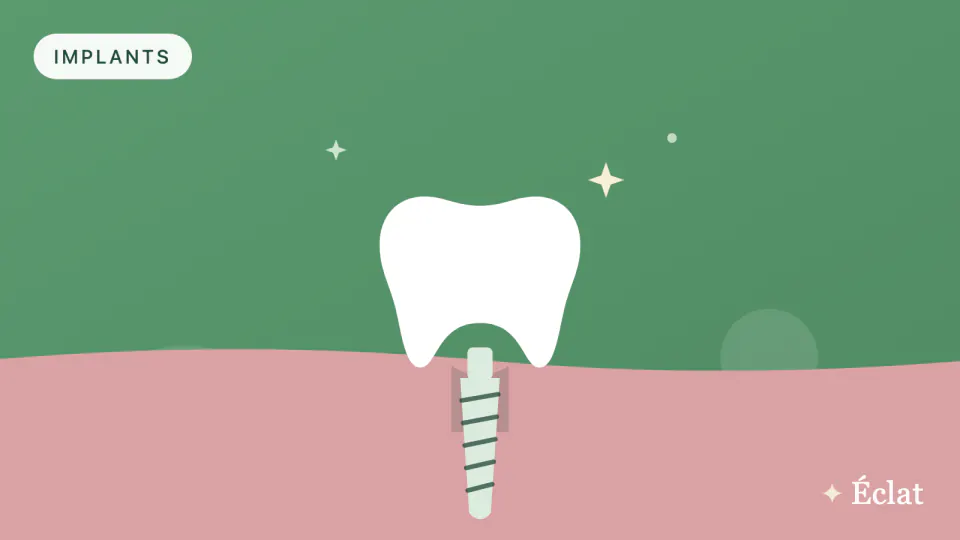
Dental Implants Near Portola Valley: Candidacy and Long-Term Care
· Eclat Dental Studio
Considering dental implants from Portola Valley? Learn who may be a candidate, how the timeline works, and what a 2025 review says about keeping implants healthy long term.
Opening soon: Eclat Dental Studio’s estimated grand opening is February 1, 2027.
Dental implants can be a durable way to replace missing teeth, but lasting success depends on four things working together: careful planning, enough healthy bone, healthy gums, and consistent maintenance. A large 2025 review found that gum inflammation around implants is common, which is why long-term care matters as much as the surgery itself. Implant treatment typically unfolds over several months, with the exact timeline set by bone and gum health.
What does recent research say about implant success?
A 2025 systematic review and meta-analysis from the AO/AAP (Journal of Periodontology) pooled data from 102 studies and looked at how often gum problems develop around implants. It found that roughly 46% of implant patients had peri-implant mucositis, which is reversible inflammation of the gum tissue around an implant. About 21% had peri-implantitis, a more serious condition in which inflammation is accompanied by bone loss around the implant.
Those numbers sound high, and they deserve a careful reading. They describe how many patients were affected, not how many implants fail. Studies also define and measure these conditions differently, and they follow patients for different lengths of time, so the figures should be read as a general picture rather than a precise prediction for any one person. Mucositis is generally treatable with professional cleaning and better home care, and catching problems early improves the chance of keeping an implant stable.
The same body of research points to patterns dentists watch for. In the review, a history of gum disease and smoking were associated with higher risk of peri-implant problems. Diabetes and alcohol use were associated with peri-implantitis, and obesity was associated with mucositis. These are associations found across studies, not proof that any one factor causes a problem. The takeaway is still encouraging, because many of these factors can be improved before and after treatment.
Who may be a good candidate for a dental implant?
A dentist will typically look at three things: the amount and quality of your jawbone, the health of your gums, and your overall health. You do not need perfect conditions, but the conditions need to be stable.
- Bone: The implant needs enough healthy bone to hold it. If bone has thinned after tooth loss, a bone graft may be recommended first. Large grafts can add many months to the timeline.
- Gums: Active gum disease is usually treated and brought under control before an implant is placed.
- General health: Well-managed diabetes is often compatible with implants, while uncontrolled diabetes and smoking can slow healing and raise the risk of complications.
Thin bone does not automatically rule out an implant. Studies of narrow-diameter implants report generally high short- to medium-term survival rates with little bone loss, which makes them an option where space is limited. The caveat is that follow-up in these studies varied and was often short to medium term, and the evidence is less settled for very narrow or very short implants. Whether a narrow implant suits a particular site is a case-by-case decision.
3D imaging (CBCT) is commonly used to evaluate bone height, width, and nearby anatomy before a plan is recommended. That detail is a big part of planning that avoids surprises later.
How long does the implant process take?
The timeline varies, but a common sequence looks like this:
- Consultation and imaging: Exam, imaging as needed, and a conversation about goals and health history.
- Preparation if needed: Gum treatment, extractions, or bone grafting.
- Implant placement: The titanium post is placed in the jaw.
- Healing: The bone gradually bonds with the implant, a process that typically takes a few months depending on the site and bone quality.
- Final restoration: After the gums settle around the connector, the custom crown, bridge, or denture is attached.
Some patients are candidates for a shorter approach in which the tooth is placed on the same day as the implant, but this depends on bone stability and is not appropriate for everyone. If you want to understand your options in more depth, our page on dental implant care explains how gum health and implant planning fit together.
How do you care for an implant long term?
An implant cannot decay, but the gum and bone around it can still become inflamed. That is why maintenance is the part of treatment people most often underestimate.
- Brush twice daily and clean between the implant and neighboring teeth every day, using interdental brushes, floss designed for implants, or a water flosser.
- Keep regular professional cleanings and check-ups, where the gum tissue and bone levels around the implant can be monitored.
- Do not smoke or vape, and keep conditions like diabetes well managed.
- Call your dentist promptly if you notice bleeding, swelling, a bad taste, or a loose-feeling implant. Early treatment is far easier than late treatment.
Planning an implant from Portola Valley
Portola Valley residents considering implants often want to understand the full timeline before committing. Our Mountain View office serves Portola Valley and nearby communities. Because implant care involves several visits over a few months, we try to plan appointments efficiently for patients coming from Portola Valley and the surrounding area.
On cost, the investment varies with the complexity of each case, including whether grafting is needed and what type of restoration is planned. Our team can walk you through costs after your consultation. We accept all PPO dental plans and are in-network with Delta Dental, and we also accept Health Plan of San Mateo (HPSM). Coverage for implant treatment varies by plan and by case, so our team can help you check what applies to your situation. Please call to confirm whether your specific plan is accepted. Ask our team about payment options as well.
Common questions about dental implants
Q: Are implants painful?Placement is typically done with local anesthesia, sometimes with sedation options. Comfort and recovery vary by person. Soreness and swelling for a few days are common, and your dentist will go over aftercare in detail.
Q: Can I get an implant if I have had gum disease?Often this is possible once the gum disease is treated and stable, though it depends on the individual. Because past gum disease is associated with a higher risk of problems around implants, ongoing maintenance becomes especially important.
Q: Do implants last forever?The implant itself can last for many years, and studies report high survival rates, but nothing is guaranteed. Long-term outcomes depend on bone, gum health, and the care you provide at home and at check-ups.
Q: Does having osteoporosis rule out implants?Not necessarily. A 2025 review of studies found no higher rate of gum problems around implants in patients with osteoporosis, though the number of studies was small. Your dentist will review your medications and health history.
If you are weighing implants and want clear answers, we would be glad to help. Our team serves patients in Portola Valley and nearby cities, and you can schedule a consultation by calling (650) 917-8348 or visiting eclatdentalstudio.com.
This article is general education and not a substitute for an exam. Whether implants are right for you depends on an in-person evaluation.