Dental Implants in Redwood City: Planning, Timeline and Aftercare
· Eclat Dental Studio
How dental implants work for Redwood City patients: what planning involves, why healing takes time, when bone grafting may add steps, and how to care for implants long term.
Opening soon: Eclat Dental Studio’s estimated grand opening is February 1, 2027.
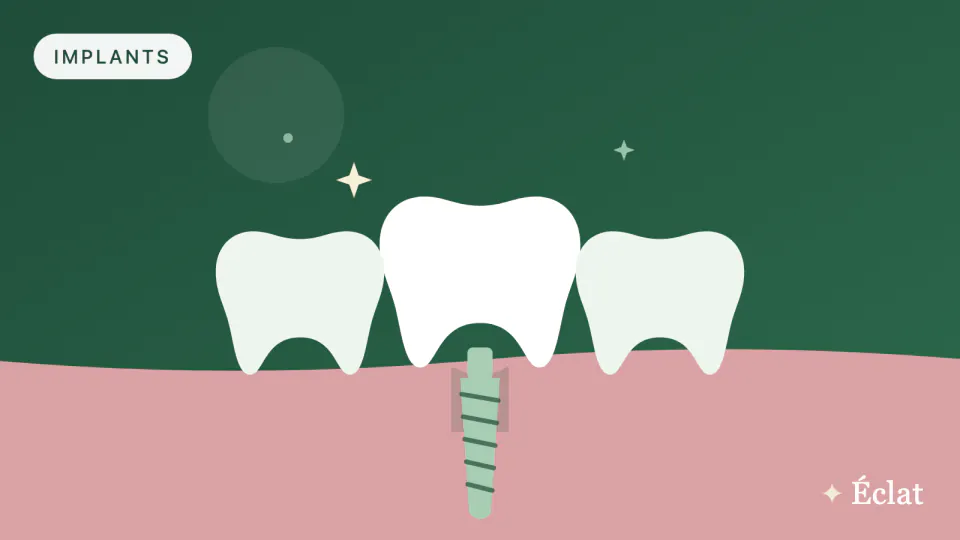
For most Redwood City patients, getting a dental implant means four stages: an evaluation with 3D imaging, placement of the implant, a period of healing while it fuses with the jawbone, and a final crown, bridge or denture. The main thing that changes the timeline is whether bone grafting is needed. Long-term success depends on daily cleaning and regular professional checkups.
What happens during implant planning?
Planning starts with a thorough exam, a review of your medical history and imaging of the jaw. Planning typically includes 3D imaging such as CBCT to assess bone height, bone thickness and nearby structures. The goal is a treatment plan built around your anatomy.
Many adults can be considered for implants, but candidacy depends on overall health, bone, gum condition and medications. Only an in-person evaluation can determine whether an implant is appropriate for you. Implants are usually deferred in a growing child until jaw growth is complete. Health conditions, smoking and a history of gum disease can all affect planning and success rates, so a dentist will want to review them with you. People who lost teeth to gum disease may still be considered, though the gum disease generally needs to be under control first.
Whether you live in Friendly Acres, Centennial or near Downtown Redwood City, the first question is usually the same: how long will this take? That depends on what the planning visit finds, especially about your bone.
How long does the implant timeline take?
Right after placement, early healing takes the first few days to weeks. This is when the gum and bone begin to recover. Then comes osseointegration, where bone cells grow onto the implant surface and anchor it. This typically takes several months. Healing time varies by case and bone quality, and a dentist will tell you whether any accelerated approach is appropriate for you. The final restoration is usually placed once the implant has bonded and the surrounding gum tissue has matured.
Bone loss is common after a tooth is lost or after gum disease. Many people have less bone than they expect, and that may add steps:
- Socket preservation: bone material placed at the time of an extraction to help keep the ridge's shape and volume.
- Bone grafting: an approach to rebuilding bone where there is too little to hold an implant securely.
- Sinus augmentation: adding bone beneath the upper-jaw sinus when the back upper jaw is too thin. The graft needs a few months to integrate. Depending on the case, the implant may be placed at the same time or in a later procedure once the graft has healed.
Grafting lengthens treatment, and it may help rebuild bone support for an implant. Outcomes vary by individual, and grafts do not always succeed, so a dentist can explain the risks and expected results for your case. You can also read more about dental implant care, which looks at gum health, bone and the final restoration together.
What does aftercare look like?
In the first days, plan to rest and limit strenuous activity. Some discomfort, swelling and bruising are normal, and a dentist may suggest over-the-counter pain relief. A soft diet is usually advised early on, along with specific instructions for gently cleaning the surgical area. Follow-up visits check healing and implant stability and confirm when you are ready for the final restoration.
Long-term care matters just as much. Plaque is the main trigger for inflammation around implants, and the area where the crown meets the gum is harder to reach than a natural tooth. Dentists generally recommend a few practical habits:
- Use interdental brushes for the narrow spaces beside and between implants.
- Try a small, round, pointed brush head for the area around the crown margin.
- Choose floss with your dentist's guidance. Some fluffy floss types can leave fibers behind, so the right product depends on your restoration.
- Keep up professional cleanings. Many dental professionals recommend individualized recall intervals. Many patients start with shorter intervals, which are lengthened if the tissue stays healthy.
- Tell your dentist about smoking and about conditions like diabetes. These affect how often you should be seen.
Bleeding around an implant, swelling, a pus-like discharge or a crown that feels loose are reasons to call promptly rather than wait for your next cleaning.
Planning your visit from Redwood City
Getting to our Mountain View office from Redwood City often takes roughly 20-30 minutes depending on traffic, so the consultation and follow-up visits can fit into a busy schedule. Our team speaks English, Mandarin, Cantonese and Spanish.
The investment in an implant varies with case complexity, whether grafting is needed and the type of restoration. After your consultation, our team can discuss costs and options with you. The studio accepts all PPO dental plans and is in-network with Delta Dental, and our team can walk you through your benefits. The studio also accepts Health Plan of San Mateo (HPSM). Implant coverage varies by plan, so our team can help you check your benefits before you commit. For anything else, ask our team about payment options.
Common questions about dental implants
Q: Does implant surgery hurt?The procedure is done under local anesthesia, with sedation sometimes used. Afterward, some soreness, swelling and bruising are expected and usually improve over the first days to weeks.
Q: Am I a candidate if I have gum disease or diabetes?Possibly. Dentists usually want gum disease controlled and medical conditions well managed first. A planning visit with imaging and a health review gives a clearer answer for your situation.
Q: What if I don't have enough bone?Bone grafting or sinus augmentation may help rebuild bone support. It adds healing time, and outcomes vary by individual; a dentist can explain the risks and expected results for your case.
Q: Do I still need checkups after the crown is placed?Yes. Regular professional maintenance helps catch inflammation around the implant early, when it is easier to manage.
If you are weighing implants, a consultation is a good way to see what your timeline would look like. Call (650) 917-8348 or visit eclatdentalstudio.com to schedule. We are glad to serve patients in Redwood City and nearby cities.
This article is general education, not individual medical advice. Always follow the instructions your own dentist gives you, and call promptly or seek urgent care if you have severe pain, fever or heavy bleeding.