Loose Dentures in Mountain View: Reline, Repair or Replace?
· Eclat Dental Studio
Dentures that slip, rub or click usually need a reline, repair or remake, not more adhesive. Here's how each option works and how to choose, for Mountain View patients.
Opening soon: Eclat Dental Studio’s estimated grand opening is February 1, 2027.
Dentures that have become loose, sore or noisy usually need a professional fit correction, and the right fix depends on what has changed. A reline resurfaces the fitting side, a rebase replaces the pink base, a repair mends a crack or broken tooth, and a remake is a new denture. A dentist can tell which one applies after examining both your mouth and the denture.
Why do dentures stop fitting over time?
A denture rests on gum tissue and the bone beneath it. After teeth are removed, that bone and soft tissue keep changing shape, and clinical literature describes the change as progressive and expected rather than a sign you did something wrong. A denture made to match your mouth years ago no longer matches it today. Everyday chewing also wears the denture itself, and the teeth can flatten.
Immediate dentures, which are placed the same day teeth are removed, often need a reline or a remake once the jaw has healed. Even a well-made conventional denture can feel strange for the first few weeks while your cheeks and tongue adapt. Minor soreness early on is common. Soreness that persists is worth a visit.
Common signs your denture needs attention:
- It shifts or slips when you talk, laugh or eat
- Sore spots, ulcers or irritated gums
- Food packing underneath it
- Cracks, chips or a tooth that has come loose
- You need more and more adhesive to keep it in place
Reline, rebase, repair or replace: what is the difference?
Reline: The dentist adds new material to the surface that touches your gums so it matches your current tissue shape. Some liners are made chairside or in a lab, and they differ in how long they last. Softer materials tend to need replacing sooner than hard acrylic.
Rebase: The whole pink base is replaced while the existing teeth are kept. It is sometimes considered when the base is worn, stained or porous but the teeth and bite are still in good condition.
Repair: A crack, a chip or a broken tooth can often be fixed. A denture that has needed many repairs may be telling you something, though.
Replace: A new denture is usually the better choice when the teeth are badly worn, the base is thin or has been repaired many times, or the bite has shifted too far for a reline to correct. Clinical guidance generally treats a reline as appropriate only when the existing denture is still in good condition and the bite can be re-established properly. Dentists often recommend evaluating dentures every few years and replacing them roughly every 5 to 10 years, depending on wear and tissue changes, though your own mouth sets the real timeline.
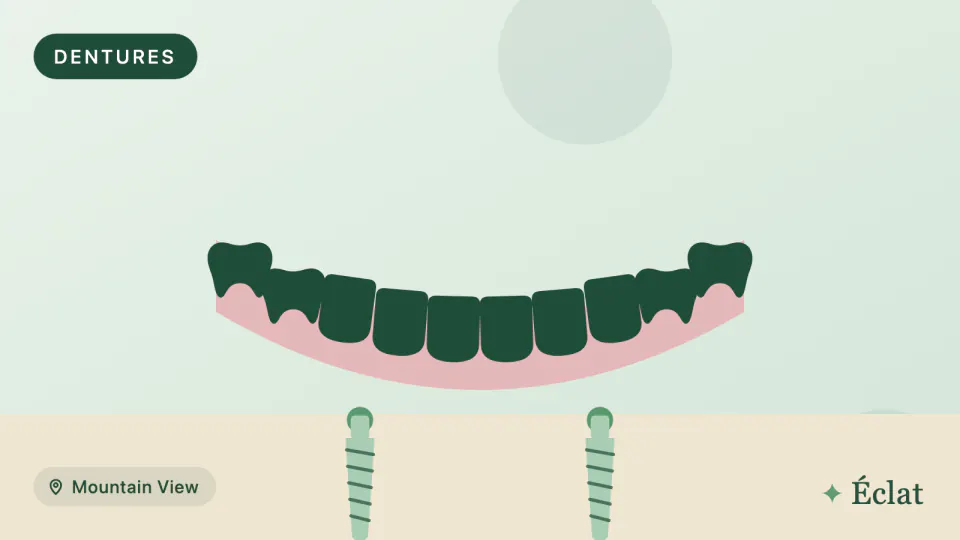
If a denture is loose and you wear it all day, implant-retained dentures are another option a dentist may discuss with you. A dentist may use imaging to evaluate the bone for that conversation.
What should you do while you wait for an appointment?
A few habits protect your gums in the meantime:
- Brush your dentures daily with a soft brush and a non-abrasive cleanser. Rinse off loose food first.
- Gently brush your gums, tongue and palate with a soft brush each morning before putting the denture in.
- Take your dentures out at night and keep them in water or a denture-cleansing solution so they do not dry out or warp.
- Use adhesives that carry the ADA Seal of Acceptance, and follow the directions. Adhesive can help a little, but it is not a fix for a denture that no longer fits.
Please do not try to adjust a denture yourself, glue it, or boil it. Heat can warp the plastic, and home fixes can make the fit worse and injure tissue. Some chairside liner materials need careful handling because of heat during setting and tissue sensitivity, which is one more reason a dentist should choose and apply them. Left alone, a poorly fitting denture can cause ulcers, irritation and fungal infection under the denture, so persistent soreness deserves an exam.
What is a denture visit like for Mountain View patients?
Families in Mountain View neighborhoods such as Old Mountain View, Waverly Park and Monta Loma often help a parent with denture care as well as their own. Our office is conveniently located in Mountain View at 530 Showers Drive, Suite 3, so a short fit check is easy to plan for.
At an evaluation, a dentist will typically examine the gums for sore areas, check how the denture seats and how your teeth meet, and look at the base and teeth for wear or cracks. The recommendation might be an adjustment, a reline, a repair or a remake. How much a visit costs depends on which of these you need and whether a lab is involved, and our team can review costs and benefits with you at your visit. Our office accepts all PPO dental plans and is in-network with Delta Dental, though how much of a reline or repair a plan covers varies, so it helps to ask us to check your benefits. Our team speaks English, Mandarin, Cantonese and Spanish, which helps when family members want to be part of the conversation. Patients who are looking at the bigger picture of oral health can also read about our general and family dentistry services.
Common questions about loose dentures
Q: Can I just use more denture adhesive?Adhesive can help a well-fitting denture feel more secure, but it does not correct a fit that has changed. If you need to use more and more of it, that is a signal to have the denture evaluated.
Q: How long do dentures usually last?It varies. Dentists often recommend evaluating dentures every few years and replacing them roughly every 5 to 10 years, depending on wear and on how your gums and bone change. Regular checkups let a dentist spot problems earlier.
Q: Is a reline the same day?It depends on the material. Some chairside relines can be done in a visit, while a lab-processed reline usually means leaving the denture for a short time. If you cannot go without your teeth, it is worth raising that when you talk with the office about your options.
Q: Are sore spots normal?Mild soreness during the first weeks with a new denture is common. Soreness that continues, ulcers that do not heal or a denture that rubs in the same place deserve an exam.
If your dentures have started to slip, rub or crack, we would be glad to take a look. Call our office at (650) 917-8348 or visit eclatdentalstudio.com to request a consultation, whether you are in Mountain View or a nearby city like Los Altos, Palo Alto or Sunnyvale.