Full-Arch Implants in Atherton: Zirconia vs. Acrylic Bridges
· Eclat Dental Studio
Zirconia or acrylic for a full-arch implant bridge? Here is what research suggests about wear, complications, and why daily habits matter as much as surgery day.
Opening soon: Eclat Dental Studio’s estimated grand opening is February 1, 2027.
Early research suggests that screw-retained full-arch bridges with a zirconia surface tend to wear less and have fewer gum-tissue problems than bridges with an acrylic surface, while implant survival looks similar either way. The evidence is still maturing, and it is mostly observational. Daily habits such as not smoking, managing teeth grinding, and keeping up with cleanings matter as much as the material you choose.
Many people considering full-arch implants wonder how a bridge is made, what it is made of, and how long it will hold up. This article walks through what the research suggests and where it still has gaps. It is general information, not a diagnosis or individual medical advice. Talk with a dentist about your own situation before choosing a treatment.
What is the difference between metal-zirconia and metal-acrylic full-arch bridges?
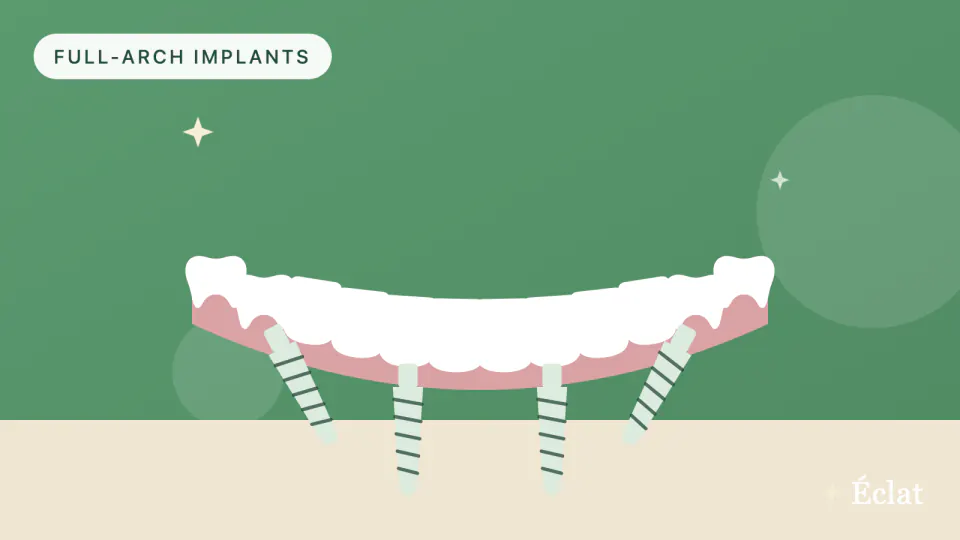
Many full-arch designs use a metal framework that is screwed onto four to six dental implants, though some zirconia bridges are milled as one piece without a separate metal framework. This article compares the two most commonly studied designs, metal-zirconia and metal-acrylic. The difference is the visible part that replaces your teeth and gums.
- Metal-acrylic: Acrylic teeth and pink acrylic gum are attached to the framework. It is lighter, and it is generally easier to repair. It is also more prone to wear, staining, and chipped or loosened teeth over time.
- Metal-zirconia: The teeth are made of zirconia, a hard ceramic. It resists wear and staining well and has a smooth, polished surface. Zirconia can chip or fracture under heavy forces, and it usually costs more up front.
What does the research show?
Several retrospective studies and systematic reviews suggest that zirconia bridges tend to show less wear and fewer complications than acrylic ones. Some of this work also points to less inflammation around the implants (peri-implantitis) and similar or slightly more favorable bone levels with zirconia. The evidence is mostly observational, however.
Just as important is what the research has not clearly shown. Implant survival has not been meaningfully different between the two designs, and findings on framework fractures, appearance, and speech have been similar. Any difference in how long the bridge itself lasts is not firmly established.
The caveats are real. Few of the studies were randomized trials, and many had a moderate to serious risk of bias, mainly because patients who receive different materials often differ in other ways. Researchers have called for long-term randomized trials. A fair summary is that zirconia may have a more favorable early profile, not that it is proven superior for everyone.
Do smoking and teeth grinding change the outcome?
They can, and this is where daily habits come in. Studies of full-arch implant patients link smoking and teeth grinding or clenching (bruxism) to more complications and lower implant survival. Grinding is also associated with loose or fractured screws, chipped ceramic, and broken acrylic teeth. This applies to both materials.
So a dentist will often talk about more than the bridge itself. Common topics include:
- Quitting or cutting back on smoking before and after surgery
- A protective nightguard if you grind your teeth
- Regular professional cleanings and home care around the bridge
- Routine checkups so small problems like a loose screw are caught early
How do you choose between them?
The right material depends on your bite, your habits, your jaw anatomy, and your budget. A dentist will typically weigh how much force you put on your teeth, how much space there is for the bridge, how the bridge will look, and how easily you can clean under and around it. Dentists often use 3D/CBCT imaging for planning because it shows bone volume and anatomy in detail.
Cost is a real consideration. Zirconia generally involves a higher upfront investment, while acrylic costs less initially but may need more maintenance or replacement over the years. The final investment varies with the complexity of your case, the number of implants, and lab work. Costs are discussed at a consultation. If you do not have insurance, ask about our membership plan, and ask our team about payment options.
Patients who want to compare approaches can read more about our full-arch implant options before they visit.
What is it like to come in from Atherton?
Our office is at 530 Showers Drive, Suite 3, in Mountain View, a short drive from Atherton, depending on traffic. Because full-arch care involves several visits, many people appreciate being able to plan appointments around their schedule. Our team speaks English, Mandarin, Cantonese, and Spanish.
On insurance, we accept all PPO dental plans and are in-network with Delta Dental. We also accept Health Plan of San Mateo (HPSM). Implant coverage varies by plan, and our team can help you check your benefits.
Common questions about full-arch zirconia and acrylic bridges
Q: Is zirconia always better than acrylic?Not necessarily. Current research suggests zirconia may have an edge for wear and gum health, but long-term survival looks comparable, and the evidence is still developing. Your habits and bite matter a great deal.
Q: Can I switch materials later?Often the bridge can be replaced while the implants stay in place, provided they are healthy and positioned well. A dentist can assess this at an exam.
Q: Will smoking really affect my results?Research shows lower implant survival in smokers. Dentists commonly recommend stopping before surgery and staying smoke-free during healing and beyond.
Q: Do I need a nightguard?If you grind your teeth, studies link this to more chipping and screw problems. Many dentists recommend a nightguard to protect the bridge.
Ready to talk it through?
If you are in Atherton or a nearby city and are weighing full-arch options, we would be glad to review your situation with a consultation. Call (650) 917-8348 or visit eclatdentalstudio.com to schedule a visit.