Full-Arch Implants in Mountain View: Zirconia vs. Acrylic
· Eclat Dental Studio
Comparing zirconia and acrylic full-arch implant bridges: what published research suggests about wear, complications, and daily habits, and where the evidence is still maturing.
Opening soon: Eclat Dental Studio’s estimated grand opening is February 1, 2027.
For a full-arch implant bridge, zirconia-based designs have generally been associated with fewer prosthetic complications than metal-acrylic designs in published studies. Acrylic still has real advantages, including cost and ease of repair. Implant survival is high with either material, and daily habits and maintenance, such as not smoking and keeping the bridge clean, play an important role in long-term success alongside surgical and prosthetic factors. Much of this evidence is still maturing, so treat it as a guide for your consultation, not a guarantee. This article is general education, not individual medical advice. Only an examination and imaging can determine whether full-arch implants, and which material, are right for you.
What is a full-arch implant bridge made of?
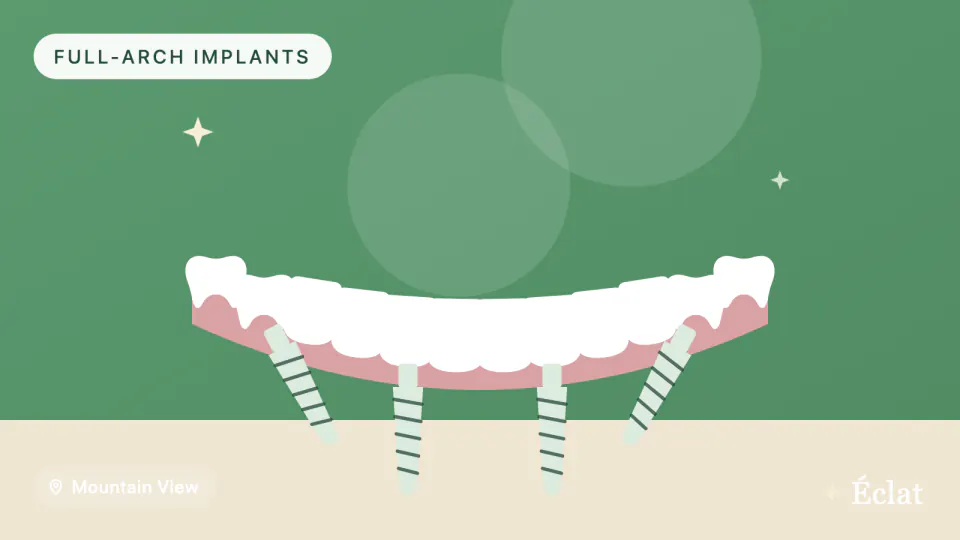
A full-arch prosthesis replaces an entire row of teeth. It is usually held in place by four to six implants and screwed onto them, so a dentist can remove it later for maintenance. Underneath, most designs have a metal framework. What sits on top of that framework is where the main choice lies.
- Acrylic (metal-acrylic): Acrylic teeth and pink gum-colored resin over a metal frame. It is lighter, somewhat forgiving under biting forces, and easier to repair or modify.
- Zirconia (metal-zirconia or full zirconia): A ceramic material that resists wear and staining better than acrylic. It is harder, so it needs careful design and fit.
What does recent research say about zirconia vs. acrylic?
Published research suggests that zirconia-based bridges may have fewer delayed complications, such as worn or fractured teeth, than metal-acrylic bridges. Findings vary between studies, and some report little difference in failure rates over shorter follow-up periods. Implant survival appears comparable between the materials.
Here is what this means in plain terms:
- Zirconia bridges tend to wear less, though zirconia can still chip or fracture and may need lab-based repair, which is harder than repairing acrylic.
- Many studies report high implant survival rates (often in the mid-90% range or above) with either material.
- Most of these studies are retrospective and follow patients for only a few years. Long-term, head-to-head data is still limited.
Do daily habits matter alongside the material?
Yes, they play an important role. Many studies report high implant survival rates (often in the mid-90% range or above), and the few failures often cluster in patients with risk factors. Smoking is the one most often discussed. The evidence is mixed: some studies show lower survival in smokers and others show no clear difference. Even so, dentists commonly advise cutting back or quitting around surgery and healing.
Other habits count too:
- Cleaning under and around the bridge every day with a floss threader, interdental brush, or water flosser.
- Keeping regular maintenance visits, where the bridge may be checked and professionally cleaned.
- Wearing a night guard if you clench or grind, which protects both acrylic and zirconia.
How do you choose in Mountain View?
The material choice depends on your bite, your jaw anatomy, whether you grind your teeth, your budget, and how you feel about maintenance. Acrylic is sometimes considered for people with a heavy bite, because it is easier to repair and cushions forces. Zirconia is sometimes considered by people who want durability and stain resistance. Understanding these trade-offs before you commit is a reasonable thing to expect from a consultation. You can read more about our full-arch implant options to see how treatment is planned.
Eclat Dental Studio is a short drive for many people in Mountain View, which can make the multiple visits full-arch care involves easier to manage. Patients also travel from nearby cities.
Cost varies with case complexity, the number of implants, the bridge material, and lab fees. A written estimate after your consultation will outline costs.
Common questions about full-arch implant bridges
Q: Is zirconia always better than acrylic?Not always. Zirconia tends to wear less, but it can chip or fracture and may need lab-based repair. Acrylic is easier to repair and can be gentler under heavy biting. A dentist will typically weigh your bite and habits before recommending one.
Q: Can smokers get full-arch implants?Many can, but research on smoking and implant survival is mixed, and dentists often recommend quitting or reducing smoking to support healing. Your health history will shape the plan.
Q: Will I need maintenance after the bridge is placed?Yes. Dentists usually recommend regular checkups, professional cleanings, and sometimes removing the bridge for deep cleaning. Acrylic teeth may eventually need replacing; zirconia often needs this less.
Q: How long do these bridges last?It depends on the material, your bite, and how well you care for them. Implants themselves often last many years, but long-term data comparing materials is still developing, so no one can promise a specific number.
Ready to talk through your options?
If you are weighing zirconia against acrylic, a consultation is a good place to start. Serving patients in Mountain View and nearby cities, our team can answer your questions and explain your options. Call (650) 917-8348 or visit eclatdentalstudio.com to schedule.