Zirconia vs. Acrylic Full-Arch Implant Bridges: Portola Valley Guide
· Eclat Dental Studio
Zirconia or acrylic for a full-arch implant bridge? Some research suggests zirconia may wear less, but the evidence is still maturing. A general guide for Portola Valley patients.
Opening soon: Eclat Dental Studio’s estimated grand opening is February 1, 2027.
For a full-arch implant bridge, the choice is usually between acrylic over a metal frame and zirconia over a metal frame. Some systematic reviews suggest that zirconia may show less wear and possibly less inflammation around the implants. The evidence is mostly observational, so dentists tend to treat it as a promising trend rather than a final verdict.
This article is general information and is not a substitute for an examination and personalized advice from a licensed dentist.
What is the difference between an acrylic and a zirconia full-arch bridge?
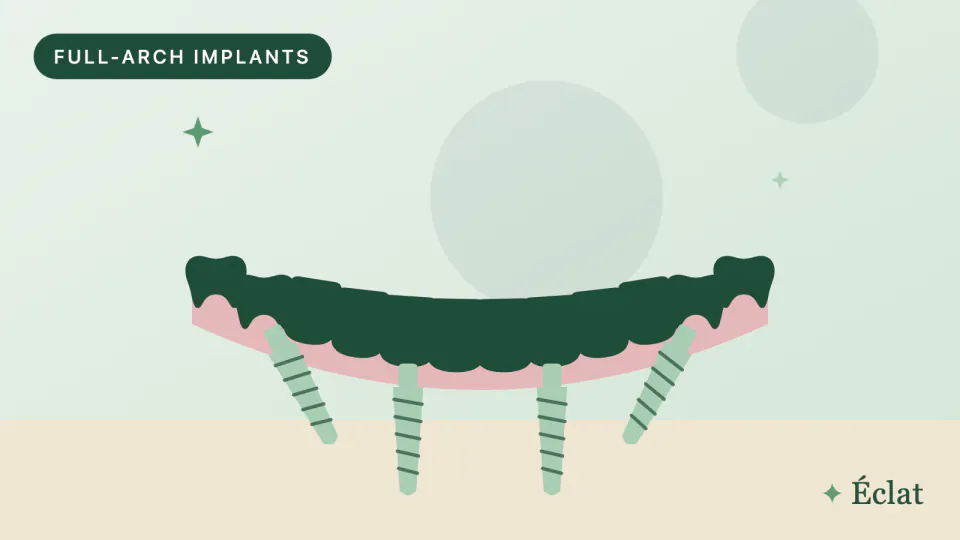
A full-arch bridge replaces a whole row of teeth. It is screwed onto a small number of dental implants. Two designs are common:
- Metal-acrylic (hybrid): pink acrylic and acrylic teeth over a metal frame. It is lighter, and some dentists find it easier to repair if a tooth chips or wears.
- Metal-zirconia: a metal frame covered with zirconia, a dense ceramic. It is harder and generally resistant to staining, and some patients report that it feels firm in the mouth.
Both designs are meant to be fixed in place, so you brush and clean them every day instead of taking them out at night. A common question is which one lasts longer, and researchers have been trying to answer that question too.
What does the research show?
Several systematic reviews have compared zirconia full-arch bridges with acrylic ones. Their general pattern is as follows:
- Wear: Zirconia bridges tend to show less wear than acrylic ones.
- Gum and bone health: Some studies link zirconia to less inflammation around implants (peri-implantitis) and less bone loss at the implant neck, though results vary.
- Survival and function: Studies generally have not found clear differences in implant survival, framework fractures, appearance, or speech between the two materials.
There are limits to this evidence. Many of the included studies were not randomized trials, and many carried a moderate to serious risk of bias. For example, patients who get one material may differ from patients who get the other in ways that affect results. Researchers continue to call for longer, better-designed trials. The honest summary is that the data may favor zirconia in some areas, but the data are still maturing.
Is zirconia trouble-free?
No. Large retrospective case series of laboratory-made monolithic zirconia full-arch prostheses have reported good durability at around five years, but complications such as fracture or chipping can still occur. These findings come from a different design than the metal-zirconia hybrids described above, so they should not be assumed to apply to every zirconia bridge. Factors such as limited vertical space, heavy biting forces, and ceramic thickness are often discussed as influences on these complications.
This is why planning matters as much as the material. A dentist will typically look at how much room there is between the upper and lower jaws, how you bite and clench, and how much bone you have, and will study bone volume and anatomy before treatment is planned. Acrylic is still a reasonable choice for some patients. It may absorb some biting force, and a chipped tooth or worn section can be simpler to repair in some cases.
Do daily habits really matter?
Yes. Surgery gets the implants in place, but long-term results depend on what happens afterward. Research points to a few habits that matter:
- Cleaning under the bridge every day with floss threaders, a water flosser, or small interdental brushes, as shown by your dental team.
- Regular professional maintenance visits, since plaque around implants can cause bone loss before you notice any symptoms.
- Not smoking. The research on smoking and full-arch implants is mixed. Some studies find no significant difference in survival, and others link smoking to more bone loss and peri-implantitis. Most dentists advise cutting back or quitting.
- Managing clenching or grinding, which can chip ceramic or wear acrylic. A night guard is often recommended.
A well-made bridge that is poorly maintained can still run into trouble. A good plan includes the material, the maintenance routine, and the habits you can realistically keep.
What should Portola Valley patients expect from a consultation?
We welcome patients from Portola Valley and surrounding communities, and our Mountain View office is a short drive away. A consultation typically involves reviewing your health history and checking your gums and bone. We would also talk through full-arch implant options, including how each material might suit your goals and your budget.
Cost varies with case complexity, the number of implants, the material, and lab work. We will give you a written estimate after your consultation instead of a general quote. We accept all PPO dental plans and are in-network with Delta Dental. We also accept Health Plan of San Mateo (HPSM), San Mateo County's Medi-Cal plan. Coverage for implant treatment under Medi-Cal is generally limited. Our team can walk you through your coverage and help check what applies to you.
Common questions about zirconia and acrylic full-arch bridges
Q: Is zirconia always better than acrylic?Not necessarily. Some research suggests zirconia may show less wear and may be associated with healthier tissue around implants. But the evidence is mostly observational, and the right material depends on factors a dentist can evaluate, such as bite, available space, and personal preferences.
Q: Can an acrylic bridge be converted to zirconia later?Sometimes, depending on the existing implants and bone. A dentist can evaluate whether the implants and their positions can support a new bridge. That depends on how the implants were placed and how healthy the surrounding bone is.
Q: Does a zirconia bridge feel different?Some patients report that zirconia feels firmer and acrylic feels slightly softer, but experiences vary. Both can look natural when well designed.
Q: Do you speak languages other than English?Yes, our team speaks English, Mandarin, Cantonese, and Spanish.
Take the next step
If you are weighing zirconia against acrylic, a consultation is a good way to compare them for your own situation. We serve patients in Portola Valley and nearby cities. Call (650) 917-8348 or visit eclatdentalstudio.com to schedule a visit at our office at 530 Showers Drive, Suite 3, Mountain View.