Implant or Bridge for One Missing Tooth? A Cupertino Guide
· Eclat Dental Studio
Comparing a single dental implant with a traditional bridge: longevity, timeline, risks, neighboring teeth, upkeep, and how to choose. General education for Cupertino patients.
Opening soon: Eclat Dental Studio’s estimated grand opening is February 1, 2027.
For one missing tooth, a dental implant is one of the most commonly discussed options, because it replaces the tooth without leaning on its neighbors and has generally performed well in the research. A traditional bridge is still a sound choice when you want a faster timeline, when the neighboring teeth already need crowns, or when bone or health factors make surgery a poor fit. The right answer depends on your bite, your bone, and your priorities, which is why a personal exam matters more than any general rule. This article is general education and not a substitute for an exam and individualized advice from a licensed dentist.
How do an implant and a bridge actually differ?
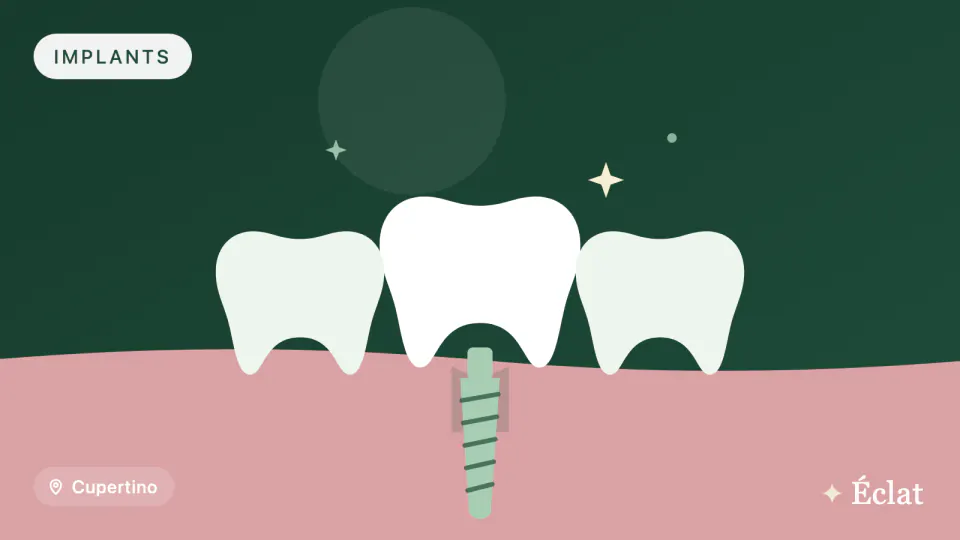
A single implant replaces the root of the missing tooth with a small post placed in the jawbone, and a crown is attached on top. It stands on its own, so the teeth beside the gap are left alone.
A traditional bridge works differently. The replacement tooth is joined to crowns on the teeth on either side of the gap, and those neighbors carry the load. That is why bridges make the most sense when the adjacent teeth already have large fillings or need crowns anyway. If those neighbors are healthy and untouched, many dentists lean toward an implant so sound tooth structure stays intact.
What does the research say about how long each lasts?
Systematic reviews have generally found that implant-supported single crowns perform well over the long term, and that implants and bridges often show similar survival in the first five years. Differences tend to show up in how each option fails or needs maintenance rather than in a simple winner. Because studies vary in design and many are observational, no one can promise a number of years for either option.
Two takeaways are worth keeping. First, smoking, tooth grinding (bruxism), and untreated gum disease raise the risk of complications for both implants and bridges, so a dentist will typically address them first. Second, home care and regular checkups shape the outcome for both options. A replacement tooth that sits over the gum, like the middle part of a bridge, can be harder to keep clean, and plaque control and maintenance visits are important for the long-term health of the bone and gum around an implant.
What are the risks of each option?
An implant involves a minor surgical procedure, so risks include infection, a post that does not bond with the bone, and peri-implantitis, an inflammatory condition of the gum and bone around the implant. An implant that fails may need to be removed or revised. A traditional bridge carries its own risks: the supporting teeth can develop decay or need a root canal, and a bridge may loosen, need recementing, or eventually need replacement.
Other alternatives exist as well, including a resin-bonded bridge, which is more conservative with neighboring teeth in suitable cases, and a removable partial denture. A dentist can explain which of these fit your situation.
How long does each treatment take?
This is where bridges have a real advantage. Implant treatment generally takes several months longer than a bridge and needs more appointments. An implant usually involves imaging and planning, placement, a healing period while the post bonds with bone, and then the final crown. A bridge is typically completed in fewer visits over a few weeks.
Planning matters too. A dentist may use 3D imaging to evaluate bone volume and the position of nearby structures before recommending an implant.
How do Cupertino patients usually decide?
Many patients ask about scheduling and time off. An implant means more visits spread over more months, while a bridge is quicker. Some patients choose a bridge for exactly that reason, and that is a reasonable decision when the neighboring teeth already need crowns.
If you are weighing the implant route, you can read more about dental implant care and how planning and healing work. Our office at 530 Showers Drive, Suite 3, Mountain View is a short drive from Cupertino, so a consultation is an easy trip.
Cost is another factor, and it varies with the complexity of the case, the materials, and how many steps are involved. The best way to compare is a written estimate after an exam. We accept all PPO dental plans and are in-network with Delta Dental, and benefits for implants and bridges often differ, so it helps to review your coverage together before deciding.
Common questions about implants and bridges
Q: Does a bridge damage the teeth next to the gap?A traditional bridge relies on the neighboring teeth for support, so they are prepared to hold crowns. If those teeth are healthy, that is a real tradeoff. If they already need crowns, it matters much less.
Q: Is an implant always the better long-term choice?Not always. Implants perform well for many patients, but results depend on bone, gum health, and home care. A bridge can be the better fit for some patients, particularly when speed matters or surgery is not advisable.
Q: Which option is more work to keep clean?Both need daily care. A bridge requires cleaning under the replacement tooth, and an implant requires careful cleaning around the crown and gumline. Regular checkups help catch problems early in either case.
Q: Can I find out which one suits me before committing?Yes. An exam and imaging let a dentist look at your bone, bite, and neighboring teeth, and you can ask for a written estimate before making any decision.
Talk it through with our team
If you are deciding between an implant and a bridge, a consultation can turn general research into a plan for your mouth. We serve patients in Cupertino and nearby cities, and our team speaks English, Mandarin, Cantonese, and Spanish. Call (650) 917-8348 or visit eclatdentalstudio.com to schedule a visit.