Night Guards for Teeth Grinding in Portola Valley: Custom vs. Store-Bought
· Eclat Dental Studio
Custom or store-bought night guard for grinding? What recent research shows about splints, stress habits and jaw pain, and what Portola Valley patients should ask before choosing.
Opening soon: Eclat Dental Studio’s estimated grand opening is February 1, 2027.
For most people who grind their teeth, a night guard protects enamel, and many people find a custom-fit one more comfortable and easier to wear every night than a store-bought version. A guard does not treat the habit itself, though. One recent randomized trial suggests that jaw pain and grinding activity can also improve with sleep routines and relaxation training, but the evidence is still developing, so a sensible plan often pairs a guard with attention to stress and sleep. This article is general education and not a substitute for an exam or individualized advice from a dentist.
What do night guards actually do?
Grinding (bruxism) during sleep puts heavy, repeated force on teeth, fillings, crowns and the jaw muscles. Many people don't know they do it until a partner hears it, or a dentist notices flattened edges, chips or worn enamel. Others wake with a sore jaw or tension headaches.
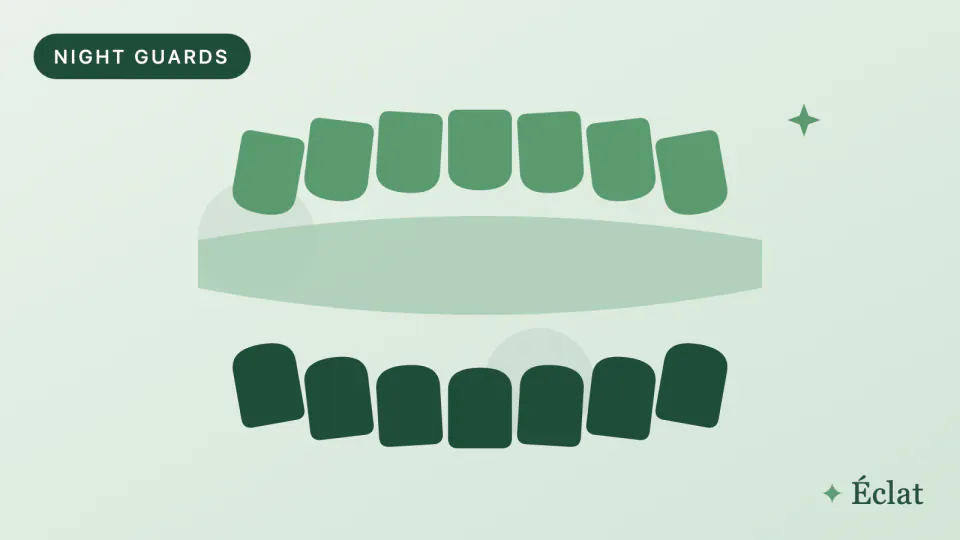
A night guard is a thin barrier between the upper and lower teeth. It absorbs the wear so your enamel doesn't. Dental professional organizations generally describe these devices as protective. Guards are not intended to change your bite, but a poorly fitting guard can, so tell a dentist if your bite feels different. The evidence that guards relieve jaw-joint pain is also more limited than many people assume. If a guard ever causes pain, a change in your bite or loosened teeth, stop using it and have a dentist take a look.
Grinding during sleep is sometimes associated with sleep-disordered breathing, such as obstructive sleep apnea, and some oral appliances can make sleep apnea worse in certain people. If you snore loudly, gasp or choke at night, or feel very sleepy during the day, ask to be evaluated for a sleep disorder.
What does recent research say about splints, Botox and stress habits?
Two recent trials help put the guard in perspective.
A 2024 randomized trial compared a custom occlusal splint with botulinum toxin injections for jaw-muscle pain in adults with probable sleep bruxism. Pain improved in both groups over the follow-up period, and the two approaches looked similar. This was a single, relatively short study, so it can't tell us about long-term outcomes. It does suggest that a well-made splint is a reasonable first step for jaw-muscle pain and not a lesser option. Botulinum toxin is used off-label for bruxism and has risks, such as muscle weakness and changes in chewing, so it is a decision to make with a qualified clinician.
A second randomized trial, published in 2024, compared an occlusal splint with sleep hygiene habits and progressive muscle relaxation, a technique where you deliberately tense and release muscle groups, in adults with self-reported sleep bruxism. Both approaches were associated with reduced bruxism activity and lower perceived stress over several months. This is still a developing area, and one trial doesn't settle the question. The practical takeaway is that a guard protects your teeth while habit and stress work may help address the cause, and the two can go together.
Custom vs. store-bought: how do they compare?
We aren't aware of a large head-to-head trial showing that custom guards outperform store-bought ones on every measure, so it's fair to say the data are still thin. The differences people notice day to day are about fit and staying power:
- Fit: A custom guard is made from an impression or digital scan of your own teeth, so it often sits closer and stays put. Boil-and-bite and stock guards are sized for the average mouth and can feel bulky.
- Comfort and consistency: A guard that sits in a drawer can't protect your teeth, and comfort is often the deciding factor in whether people actually wear it.
- Durability: Dentists report that heavy grinders can wear through thin store-bought guards, which then need replacing.
- Matching the guard to you: Dentists often note that softer and harder materials suit different patterns of grinding and clenching, and a dentist can recommend one based on your wear pattern and symptoms.
A store-bought guard is sometimes used as a short-term stopgap while you arrange an exam, but stop using it if it causes jaw pain, changes how your teeth meet, makes teeth feel loose or crowded, or feels like a choking risk. If you have jaw pain, clicking, headaches, or restorations you want to protect, dentists commonly steer patients toward a custom device. Our TMJ and jaw pain care page explains how jaw symptoms are evaluated alongside grinding.
What can Portola Valley patients expect from a consult?
Portola Valley residents, including those in Ladera and Westridge, are welcome. People often first notice grinding because of a partner's nighttime noise or a dentist's comment about worn teeth. If you're concerned about a child's grinding, have it evaluated by a dentist or pediatric provider before any guard is used.
A typical evaluation includes a conversation about sleep, stress, caffeine, and jaw symptoms, an exam of tooth wear and the jaw muscles, and imaging when it's helpful. If a guard makes sense, the device is made to your teeth and adjusted at a follow-up so it feels comfortable. Many dentists also suggest low-effort habit changes alongside it, such as noticing and relaxing daytime clenching, cutting back on gum chewing, a consistent wind-down routine, and relaxation exercises. Biofeedback and cognitive behavioral approaches can also help some people.
The investment in a custom guard varies with the type of device and materials, and we provide a written estimate after your consultation. We accept all PPO dental plans and are in-network with Delta Dental. Because Portola Valley is in San Mateo County, some patients also ask about Health Plan of San Mateo (HPSM), which we accept; coverage for specific services has limits, so our team can walk you through what may apply. Our team speaks English, Mandarin, Cantonese, and Spanish.
Common questions about night guards and teeth grinding
Q: Will a night guard stop me from grinding?Not necessarily. Its main job is to protect your teeth and cushion the jaw. Some people notice less grinding activity with a guard, but behavior and stress factors usually need their own attention.
Q: How do I know whether I grind my teeth at night?Common clues include a sore or tight jaw in the morning, headaches, flattened or chipped teeth, sensitive teeth, or a partner hearing grinding. A dental exam can look for wear patterns that point to bruxism.
Q: How long does a custom guard last?It depends on how hard you grind, the material and how well you care for it. A dentist will check for wear at routine visits and tell you when it's time for a replacement.
Q: Is Botox a replacement for a night guard?In one short-term trial, botulinum toxin reduced jaw-muscle pain about as well as a splint, but it doesn't protect teeth from wear, and long-term data are still maturing. It is used off-label for bruxism, meaning it is not FDA-approved for that purpose, and it has risks such as muscle weakness and chewing changes. It's a decision to make with a qualified clinician who knows your history.
Ready to talk it through?
If you're grinding your teeth or waking with a sore jaw, a short consultation can sort out whether a guard, habit changes, or both make sense for you. Call (650) 917-8348 or visit eclatdentalstudio.com to schedule. We're at 530 Showers Drive, Suite 3 in Mountain View, serving patients in Portola Valley and nearby cities.