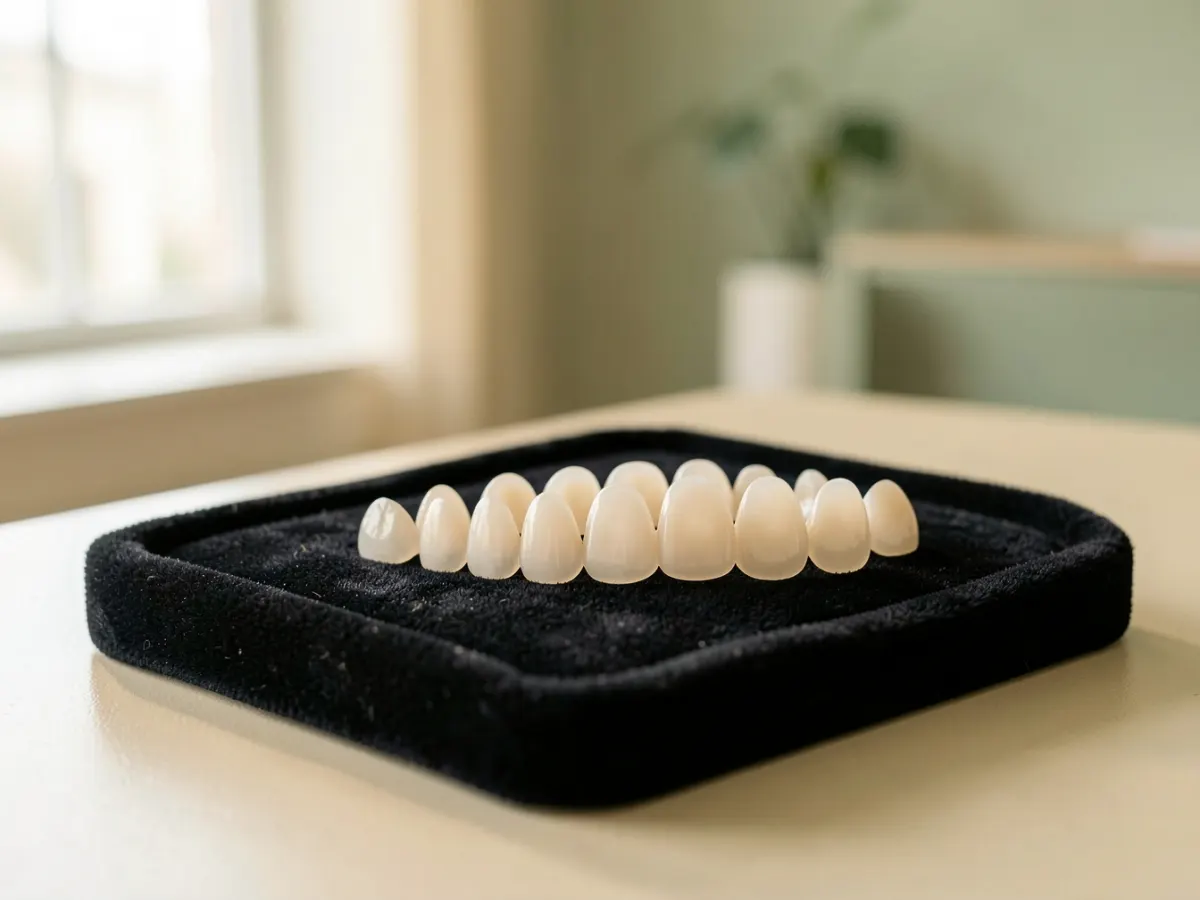
Making Porcelain Veneers Last: A Care Guide for Los Altos Patients
· Eclat Dental Studio
Veneers rarely fail because the porcelain wears out. How to protect the bond, the margins and the teeth beneath, from the first weeks through the decades that follow.
Porcelain veneers are an investment of time as well as money, and the natural question afterwards is how to keep them looking as good in fifteen years as they do on the day they are bonded. The answer is reassuring. Long-term studies show roughly 95% of porcelain veneers still in place at ten years, and well-maintained cases have been followed successfully for more than two decades. What decides which group you fall into is mostly within your control. This guide, written for patients in Los Altos and nearby, explains what actually wears out and what you can do about it.
The weak point is not the porcelain
Porcelain itself is hard, glassy and highly resistant to stain. It very rarely wears out on its own. The parts that need protecting are the thin line of resin cement holding each veneer to the tooth, and the natural tooth around its edges. Nearly every long-term problem begins at one of those two places.
Research on how veneers fail shows a fairly clear pattern over time, which is a useful way to think about care.
The first weeks: settling in
- Your bite may feel slightly unfamiliar for a few days. If one tooth seems to hit first, let us know so we can adjust it; a high spot places extra load on the porcelain.
- Mild sensitivity to cold is common briefly and should fade.
- Attend the review visit a week or two after bonding, when we check the gums, polish any rough edges and, if you clench or grind, take records for a night guard.
The first two years: guard against impact and grinding
Fracture of the porcelain and debonding from the tooth are the two most common failures reported in long-term studies, and most of them happen in the first couple of years. Grinding and clenching are the biggest accelerators.
- Wear a custom night guard if you grind or clench, or if someone has told you that you do. Most clenching happens during deep sleep, so people tend to underestimate it. Shop-bought boil-and-bite guards rarely fit closely enough to protect veneers; a guard made from a scan of your teeth spreads the forces evenly. Our article on night guards for grinding explains more.
- Stop using teeth as tools. Opening packets, biting tape, cracking ice and chewing fingernails or pens can crack a veneer in one moment.
- Wear a sports guard for contact sports or anything with a risk of a blow to the face.
Year five and beyond: protect the margins
After about five years, a slower issue becomes more relevant. The adhesive at the edge of a veneer can gradually degrade, leaving tiny gaps where new decay may form underneath. Daily care at the gumline is what prevents it.
- Floss every day, curving the floss around each tooth and sliding it gently beneath the gumline rather than snapping it down. The goal is to clean the margin without prying at it. A water flosser is a helpful addition, not a substitute.
- Brush twice a day with a soft brush and gentle pressure. Electric brushes with a pressure sensor work well. Hard bristles and vigorous scrubbing can wear the cement at the edge.
- Use a non-abrasive fluoride toothpaste. Charcoal products and heavy-duty whitening pastes can dull the glaze on porcelain and erode the bonding resin over time.
- Choose an alcohol-free mouthwash, since alcohol-based rinses can gradually soften the bonding agent.
Stains, food and lifestyle
You do not need to give up coffee, tea or red wine. Over the years, though, strongly coloured foods and drinks, including curries, berries, dark sodas and tomato-based sauces, can slowly darken the thin cement line where veneer meets tooth, creating a faint outline. Rinsing with water afterwards and brushing within an hour keeps this to a minimum. Smoking and vaping discolour the margins fastest and also raise the risk of gum disease, which can undermine the tooth supporting the veneer.
Professional care twice a year
Six-monthly cleanings let us examine each margin, polish the veneers with a paste that is safe for porcelain rather than an acidic or coarse one, and catch small changes early, when a quick repair is still possible. We also keep an eye on your gums, because some recession can occur around any restoration with age. Gentle brushing and healthy gums keep it minimal; significant recession may eventually expose a veneer edge and call for a refresh.
A simple routine
- Every day: soft brush, non-abrasive fluoride toothpaste, careful flossing, night guard if prescribed.
- After dark drinks: a rinse of water.
- Every six months: professional cleaning and margin check.
- Whenever something changes: a call to the studio.
If something goes wrong
A veneer comes off. Keep it safe in a small container and call us promptly. An intact veneer can often be rebonded. Please do not glue it back yourself; household and pharmacy adhesives contaminate the bonding surface and may mean a new veneer has to be made.
A small chip appears. Minor chips can often be polished smooth or repaired with composite.
One tooth becomes sensitive or the edge feels rough. This can be an early sign of a margin problem and is worth checking at once rather than at your next routine visit.
Common questions
Can I whiten my veneers?
Whitening gel does not change porcelain. It would only lighten the natural teeth around your veneers and could create a mismatch. If veneers look dull, professional polishing is the right step. If you plan more veneer work in future, whiten any natural teeth first.
Do I really need a night guard if I only grind now and then?
We recommend one. The cost of a custom guard is small compared with replacing even a single cracked veneer.
Do veneers need special products?
They do not. Consistent, gentle care matters much more than any particular brand.
A maintenance visit
Whether your veneers are new or years old, we are happy to review them, check the margins and fit a night guard if needed. Eclat Dental Studio is in Mountain View on Showers Drive, reached from Los Altos via San Antonio Road or Foothill Expressway. Read more on our cosmetic dentistry page or call (650) 917-8348.