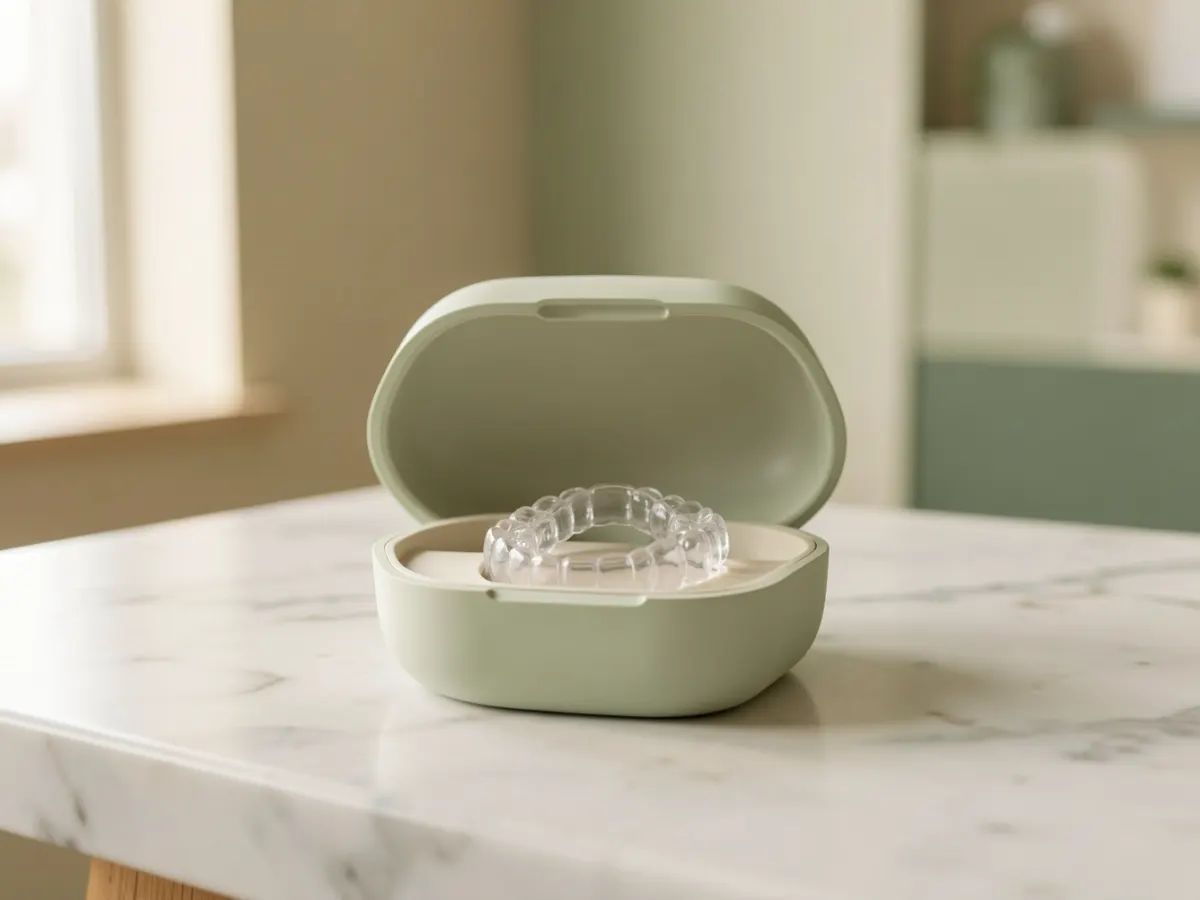
Keeping Your Result: A Practical Guide to Retainers After Invisalign
· Eclat Dental Studio
Retainers are what hold your teeth in place once Invisalign ends. How long to wear them, how to clean them, and what a tight fit is telling you.
Once your final aligner comes out, a retainer becomes the one thing standing between your new smile and a gradual slide back toward where you began. The practical takeaway is simple: expect to wear a retainer at night for the long term and to clean it every day. Most people wear theirs nearly full time for the first three to six months, then move to nights only for good. With steady wear, careful cleaning and a quick call when something feels different, the result you worked for can last for decades.
Why teeth want to move back
Teeth shift because the bone and gum tissue around them slowly remodel, and that remodelling carries on after treatment finishes. Through roughly the first year, the bone is still firming up around the new positions, which is precisely when the risk of relapse is greatest. On top of that, the daily forces of chewing, swallowing, speaking and resting tongue position press on teeth for life. Even an excellent result will tend to drift; the retainer's job is to hold it steady.
This is true of any orthodontic treatment, not only aligners. Braces and aligners face the same biology. Reassuringly, retainers are predictable, require little effort, and are far simpler than going through orthodontics a second time.
How long to wear them
Most patients follow a stepped routine, which we adjust according to how your bite settles:
- First three months or so: close to full-time wear, about 22 hours a day, out only for meals, drinks other than water, and cleaning.
- Months three to twelve: every night, typically 8 to 10 hours.
- After the first year: nightly wear, indefinitely. Some people eventually reduce to several nights a week, but going weeks without it is where problems begin.
A retainer that suddenly feels snug is an early sign that teeth have started to move. Wear it more for a few days and see whether the fit eases. If it does not, call us promptly, because correcting a small shift early is much easier than beginning again.
The main types of retainer
Depending on your case, we may suggest one type or a combination:
- Clear vacuum-formed retainers resemble your last aligner and are the usual choice after Invisalign. They are discreet, comfortable and easy to sleep in.
- Hawley retainers pair an acrylic base with a fine wire across the front teeth. They are sturdy, can be adjusted, and often outlast clear plastic.
- Bonded (fixed) retainers are slim wires attached behind the front teeth, most often the lower six. They work quietly in the background but call for careful flossing and regular checks, since the bond can let go and, uncommonly, the wire can allow a twisting movement even while it looks intact.
Cleaning without causing damage
Being warm, damp and constantly bathed in saliva, retainers collect plaque, mineral deposits and bacteria quickly. A short routine keeps them clear and fresh:
- Every day: rinse in cool water as soon as it comes out, then brush all surfaces gently with a soft brush. A little mild, non-whitening toothpaste suits most retainers, although some clear plastics scratch readily, so plain water or a dedicated clear-retainer cleanser is the safer default.
- Once a week: soak it in an effervescent retainer-cleaning tablet as the packaging directs, which lifts the film a brush leaves behind.
- Avoid entirely: hot or boiling water, bleach, mouthwash containing alcohol, and the dishwasher. Heat distorts plastic for good, and strong chemicals cloud and weaken it.
A bonded retainer stays in place, so the task there is threading floss carefully under and around the wire. A floss threader or water flosser makes that considerably easier.
Habits that help, and habits that ruin retainers
- Always use the case. A retainer folded into a napkin tends to end up in the bin, and this is the most common reason people need a replacement.
- Keep it away from heat. A parked car, a radiator or a sunny table can warp plastic in a very short time.
- Remove it for eating and for anything other than water. Coffee, tea, soft drinks, sports drinks and wine discolour clear plastic and can wear it down.
- Bring it to your checkups. We can spot a fine crack, check the fit, and catch a loosening bonded wire before teeth move.
- Keep it out of reach of pets. Dogs in particular find retainers irresistible.
Common questions after Invisalign
I forgot my retainer for a week. What now?
Missing a single night is rarely an issue. After a week it may feel tight, which means teeth have begun to move. Put it back in and wear it as much as you can for a few days; if it still will not sit fully, book a check.
How long does a retainer last?
With daily use, clear retainers generally last one to three years, and Hawley retainers often longer. Bonded retainers can serve for many years but need regular inspection. Replacing a retainer from time to time is normal and does not mean treatment failed.
Can I whiten while using retainers?
Sometimes, with guidance. Certain clear retainers can double as whitening trays and others should not. Ask us before adding any gel, as some bleaching products can degrade retainer materials. Our cosmetic dentistry page covers whitening options more broadly.
My retainer broke or went missing. Is it urgent?
Call as soon as you can. A few weeks without retention can allow movement that takes extra work to reverse, and a replacement is far quicker than restarting aligners.
Is it really for life?
In practical terms, yes. Teeth continue to shift slowly through adulthood, and a nightly habit is a small price for protecting the result.
Help when you need it
If your retainer no longer fits well, is showing wear, or you have just finished treatment and want a retention plan suited to your bite, we are glad to help. If you are still weighing treatment, our article on how long Invisalign takes is a good place to begin, and our Invisalign page explains how we approach aligner care. To arrange a visit at our Mountain View studio, call (650) 917-8348.