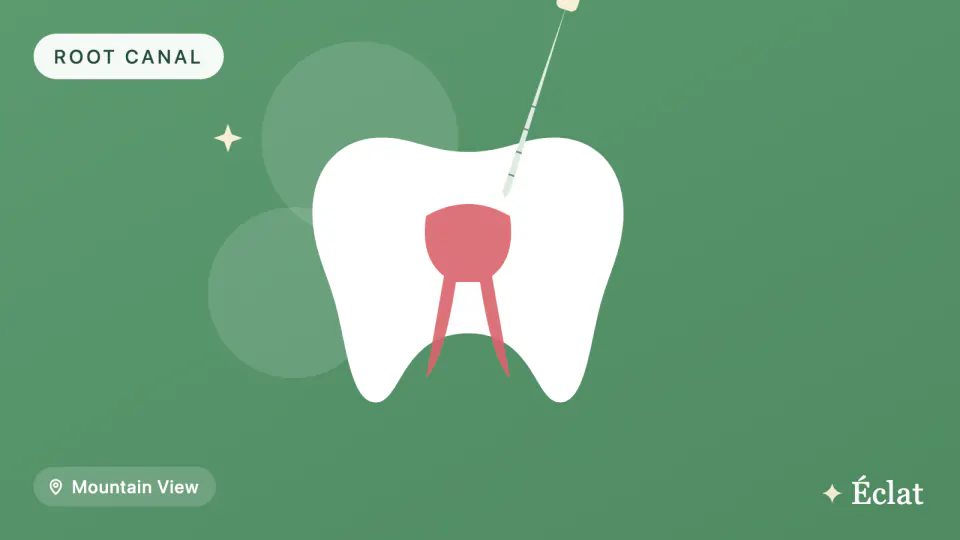
Root Canal in Mountain View: What Happens and How It Feels
· Eclat Dental Studio
Worried about a root canal? Here is what happens step by step, what it can feel like with modern anesthesia, and what recovery looks like for Mountain View patients.
Opening soon: Eclat Dental Studio’s estimated grand opening is February 1, 2027.
A root canal removes infected or inflamed tissue from inside a tooth so you can keep the tooth instead of losing it. With local anesthesia, many people describe it as comparable to getting a routine filling. Soreness afterward is usually mild and often fades within a few days. This guide walks through the steps, the sensations, and the recovery. It is general education and not a substitute for an exam and individualized advice from a dentist.
Why would a tooth need a root canal?
Inside every tooth is soft tissue called pulp. Deep decay, a crack, a chip, or repeated dental work can let bacteria reach the pulp, and it can become inflamed or infected. If the infection is left alone, it can form an abscess and spread beyond the tooth.
Signs that a dentist will want to look at a tooth include:
- Severe pain when chewing or biting
- Lingering sensitivity to hot or cold
- Swollen or tender gums, or a pimple-like bump on the gum
- A cracked or chipped tooth
- Deep decay or a tooth that is darkening
Sometimes a tooth gives no warning at all, which is one reason regular exams and X-rays matter. The most common question people have is simply, "Is it going to hurt?"
An abscess can spread. If you have significant facial or neck swelling, fever, or difficulty breathing or swallowing, seek emergency care immediately.
What really happens during a root canal?
The visit follows a predictable sequence. Root canal treatment generally looks like this:
- Exam and X-ray. The dentist confirms which tooth is affected and studies the shape of its roots. 3D imaging can add detail in complex cases.
- Numbing. Local anesthetic is placed so the tooth and the surrounding area are numb before work begins.
- Isolation. A thin rubber sheet called a dental dam is placed around the tooth. It keeps the area clean and dry and keeps saliva out.
- Cleaning. A small opening is made in the top of the tooth. Very fine instruments remove the pulp and clean and shape the canals, and disinfecting medicine may be used.
- Filling and sealing. The cleaned canals are filled with a rubber-like material and sealed. A temporary filling usually closes the opening.
- Final restoration. A permanent filling or crown comes at a follow-up visit.
Most root canals take one or two appointments, and a visit can run around an hour and a half. Follow any pre-appointment instructions from your dental team, especially if sedation is planned.
How does a root canal feel?
The numbing injection is usually the most noticeable part. Once the area is numb, you may feel pressure or vibration. If you feel sharp pain, tell the team right away. More anesthetic can be given, and some offices offer sedation options for anxious patients, so it is fine to ask about them.
Modern techniques and anesthesia make root canals much more comfortable than their reputation suggests, though experiences vary. Much of the pain people associate with them comes from the infection that made treatment necessary. Once the infected tissue is removed, that pain is often relieved.
What is recovery like?
Expect mild tenderness, especially when biting, for the first few days. For many people it improves within three to five days. Dentists often suggest the following:
- Over-the-counter ibuprofen or acetaminophen, taking whichever one you can safely use as directed
- A cold compress on the outside of the cheek in short intervals if there is swelling
- Soft foods such as yogurt, eggs, or applesauce until the tooth is permanently restored
- Waiting until numbness wears off before eating, so you do not bite your cheek or tongue
- Avoiding chewing on the treated tooth until the crown or permanent filling is in place
That last point matters. A tooth with a temporary filling is more prone to fracture, so the permanent restoration should not be put off. Back teeth usually need a crown, while front teeth often do not. Timely restoration is one of the factors linked to long-term success. Studies generally report high success rates for root canal treatment, though results vary by tooth and individual. With proper restoration and good oral care, many treated teeth last for many years, often decades.
Call the office if pain is severe, keeps getting worse, or lasts beyond a few days. The same goes for swelling. If you have significant facial or neck swelling, fever, or difficulty breathing or swallowing, seek emergency care immediately.
Root canal or extraction?
Saving a natural tooth is generally preferred when it can be saved. Pulling a tooth often means replacing it with an implant or bridge, which may involve more visits and additional cost depending on the replacement option. A dentist can look at how much healthy tooth structure remains and walk you through both options.
Planning your visit if you live in Mountain View
We're located at 530 Showers Drive, Suite 3, Mountain View, and serve Mountain View, Los Altos, Palo Alto, Sunnyvale and surrounding communities.
Cost depends on the tooth, how complex its canals are, and whether a crown is needed. Ask our team about cost and payment options. The practice accepts all PPO dental plans, is in-network with Delta Dental, and also accepts Health Plan of San Mateo (HPSM). Call (650) 917-8348 to verify your specific coverage. Our team speaks English, Mandarin, Cantonese, and Spanish.
Common questions about root canals
Q: Is a root canal more painful than a filling?Generally no. With local anesthesia, many patients describe the experience as similar to having a filling placed. Soreness afterward is usually mild.
Q: Can I go back to work afterward?Many people return to normal activities the same day. Just wait for the numbness to wear off before eating, and stick to softer foods.
Q: Will I definitely need a crown?Not always. Back teeth usually do, because they take heavy chewing forces. Front teeth often can be restored with a filling. A dentist will recommend what fits your tooth.
Q: Do root canals make you sick?Major dental organizations, including the ADA and AAE, state that current scientific evidence does not support a link between root canal treatment and systemic illnesses such as cancer or heart disease.
Q: What if the tooth gets infected again later?Retreatment or a minor surgical procedure can often save a tooth that becomes diseased again after a root canal.
If you have a toothache or have been told you may need a root canal, we would be glad to help. Call (650) 917-8348 or visit eclatdentalstudio.com to schedule a consultation at 530 Showers Drive, Suite 3.