Loose Dentures in Palo Alto? How Implant-Retained Dentures Help
· Eclat Dental Studio
Struggling with a loose lower denture in Palo Alto? Learn how snap-in implant dentures work, what the research suggests about how many implants you may need, and what upkeep and risks to expect.
Opening soon: Eclat Dental Studio’s estimated grand opening is February 1, 2027.
A lower denture held in place by dental implants is generally steadier and more comfortable than a conventional denture that rests on the gums alone, and implant-retained dentures are a well-studied option. How many implants you need depends on your jaw, your bone and your budget, so there is no single answer for everyone. A consultation with 3D imaging is the way to find out what fits your mouth.
Why do lower dentures slip, and what do implants change?
A conventional denture depends on the gums and the bone ridge underneath it. After teeth are lost, that ridge slowly shrinks, and a denture that fit well years ago starts to shift when you talk, laugh or chew. The lower jaw is usually harder to fit than the upper, because the tongue pushes against the denture and there is less surface to hold it down.
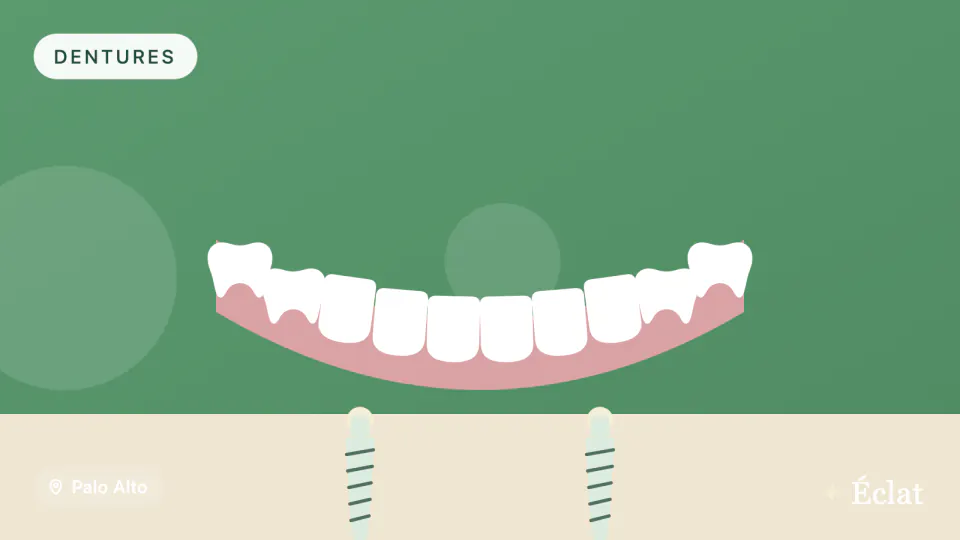
An implant-retained denture (often called a snap-in or overdenture) adds small attachments anchored in the jaw. The denture clicks onto them and still comes out for cleaning. Over many years, studies have found that wearers tend to report better stability, easier eating and higher satisfaction than with a conventional lower denture. Professional consensus statements from academic prosthodontic groups describe a lower denture retained by two implants as the best-established first option to discuss, not a last resort.
What does the research say about how many implants you need?
Recent research offers some useful guidance, along with honest limits.
One versus two implants. Recent systematic reviews have compared lower dentures held by one implant with those held by two. For the short term, some of the pooled data suggest a single implant can perform comparably on measures like implant survival and bone changes around the implant. For the longer term, the results are less certain, and the evidence on satisfaction, quality of life and maintenance is considered inconclusive. Some randomized trials also suggest that dentures on a single implant may need more repairs or replacement over time, and most of these trials followed patients for five years or less. In short, two-implant lower overdentures are the best-established approach, while single-implant approaches have less long-term evidence.
Mini implants. Recent systematic reviews suggest mini implants can perform well for several years, particularly in the lower jaw, and survival tends to be lower in the upper jaw. Upkeep matters, though: attachments wear, dentures sometimes crack, and relines are common. Many of the studies are small, short or retrospective, so the data are still maturing.
The takeaway is that implant-retained dentures work well for many people. More implants may mean more stability and fewer repairs, while fewer implants may mean a simpler procedure and a lower initial investment. Neither is automatically right.
What decides the right plan for you?
- Bone volume and density: Thin or soft bone may call for more implants, a different implant size, a longer healing period, or bone grafting.
- Upper or lower jaw: The research on upper-jaw overdentures is thinner and the results are less favorable, so upper cases are usually planned more cautiously and often use more implants.
- Overall health: Diabetes, smoking, teeth grinding and certain medications can affect how implants heal and hold up.
- Your priorities: Some people want the most stable result possible; others want a gentler first step that can be added to later.
- Budget: Cost varies with the number of implants, the attachment type and the complexity of the case. You can ask for a written estimate after your consultation.
A dentist will typically begin with an exam and 3D imaging, which may be done in the office or through a referral.
What are the risks, and who is a candidate?
Implant surgery is not right for everyone. Possible risks include infection, inflammation of the gum and bone around an implant (peri-implantitis), an implant that fails to integrate with the bone, nerve injury, and the possible need for bone grafting. Conditions such as uncontrolled diabetes, heavy smoking, certain medications and insufficient bone can affect candidacy. A dentist can review your health history and imaging to help you weigh the benefits and risks.
What is the process like, and what upkeep should you expect?
Treatment usually runs in stages: planning, implant placement, a healing period, and then fitting the attachments to your denture. Some cases allow the denture to be adapted sooner, depending on how firmly the implants are anchored. Your dentist will explain which path fits your situation.
Plan on maintenance. The rubber or nylon parts inside the denture wear and are replaced from time to time, and the denture base may need relining as your gums change. Daily cleaning of both the denture and the implant sites matters, and regular checkups catch small issues before they become bigger ones. If you would like to understand how implants fit into a longer-term oral health plan, our overview of dental implant care explains how implants and gum health work together.
Is the drive from Palo Alto worth it?
We welcome patients from Palo Alto and nearby cities. Our office at 530 Showers Drive in Mountain View is a short drive from Palo Alto, depending on traffic. Because upkeep visits are part of the long-term picture with an overdenture, a practical commute is worth considering.
Common questions about implant-retained dentures
Q: Can I keep wearing my current denture?
A: Sometimes. If your denture is in good condition and fits the shape of your gums, it can often be adapted to snap onto implants. Older or worn dentures are frequently replaced so the new attachments seat evenly. A dentist can tell you which applies after an exam.
Q: Is one implant enough?
A: For some lower-jaw cases, research suggests a single implant can work, at least over the short to medium term. Two implants are the best-established option for a lower overdenture, and the evidence on how a single implant holds up over many years is less settled. A single implant may also mean more repairs. It depends on your bone and your goals.
Q: Are mini implants a good shortcut?
A: They can be a helpful option when bone is limited, and survival data over several years look encouraging. They may need more maintenance, though, and many of the studies are small or short, so it is worth discussing the trade-offs.
Q: Does insurance help?
A: We accept all PPO dental plans and are in-network with Delta Dental. Coverage for implant-related treatment varies by plan, so our team can check your benefits and ask about payment options before you commit. We also have team members who speak English, Mandarin, Cantonese and Spanish.
Ready to talk about a steadier smile?
If your denture slips, clicks or keeps you from the foods you enjoy, a consultation can show whether an implant-retained denture makes sense for you and how many implants your jaw would realistically need. Call (650) 917-8348 or visit eclatdentalstudio.com to schedule a visit.
This article is general education, not individual dental advice. Please consult a licensed dentist about your own situation.