Jaw Pain and TMJ: When a Dentist Should Be Your First Call
· Eclat Dental Studio
Aching, locking or painful clicking in the jaw is often best assessed by a dentist first. Which symptoms point to us, which point to a physician, and what care involves.
When your jaw aches, clicks with pain, catches or locks, or tires quickly when you eat, a dentist is usually the most sensible place to start, ahead of your primary care physician. A dental exam looks at the joint, the chewing muscles, the bite and the wear on your teeth, which together account for most temporomandibular pain, and it can also rule out tooth problems that masquerade as joint trouble. At our Mountain View studio, we assess these symptoms with a conservative, reversible approach first, in line with current research.
What sits behind jaw pain
The temporomandibular joints, or TMJs, are the pair of hinges just in front of your ears that allow the jaw to open, close and glide sideways. When part of that system is not working as it should, the broad term used is temporomandibular disorder, or TMD. It is not a single diagnosis but a family of more than thirty conditions, involving the disc inside the joint, the muscles around it, the cartilage, or the way the upper and lower teeth come together.
Somewhere around 11 to 12 million adults in the United States are thought to live with jaw-joint pain. Women are affected about twice as often as men, and it appears most often between the ages of 35 and 44. For many people no single cause can be pinned down, but research suggests a combination of genetics, stress, clenching or grinding during sleep (bruxism), arthritis in the joint, and the way the nervous system handles pain. An injury, such as a blow during sport, a bad fall or even a long appointment with the mouth held wide, can also start the problem.
It is worth knowing that a click or pop with no pain is common and regarded as normal. It does not call for treatment on its own. What deserves attention is pain, or a change in how the jaw works, rather than the sound.
Signs that point to a dental visit
A dentist is a good first call if you notice:
- Pain in the jaw, cheek or just in front of the ear that builds when you chew, yawn or talk at length
- Clicking, popping or grinding noises in the joint that hurt
- A jaw that locks open or shut, or seems to catch before it opens fully
- Soreness on waking, sensitive teeth, or flat, shiny wear spots that hint at grinding at night
- Tension headaches at the temples that follow days of heavy chewing
- A full feeling or ringing in the ear that your physician has already confirmed is not an infection
Signs that point to a physician instead
See a doctor first if jaw pain comes with fever and visible swelling, follows a recent injury to the face, is accompanied by new numbness or weakness, or began after starting a new medication. Sudden, severe pain on one side of the jaw together with chest discomfort always needs emergency care, since pain referred from the heart can imitate TMD.
A dental exam covers the joint, the chewing muscles, the bite and the teeth in one sitting, which is difficult to reproduce in a general medical appointment. Where something lies outside dentistry, such as rheumatoid arthritis, a breathing disorder during sleep or a nerve problem, we refer you to the appropriate specialist.
What a jaw evaluation involves
An assessment for jaw pain is usually relaxed and conversational. You can expect:
- Questions about stress, sleep, recent dental treatment, neck or posture concerns, and any known clenching or grinding
- A hands-on examination of the joints as you open and close, the chewing muscles, and how wide you can open comfortably
- A look at wear, chips, and how your teeth meet
- Imaging where it is warranted, most often a panoramic X-ray, occasionally a 3D scan or a referral for MRI if a disc problem is suspected
The plan that follows is built around what is actually causing your pain. Two people describing nearly identical symptoms may need quite different care.
Why gentle care comes first
Federal dental research bodies are clear that, for most people, less is best. Many episodes of TMD calm down within a few weeks with simple, reversible measures, such as:
- A few days of softer food, and no gum, ice or nail biting
- Warmth on tight muscles, or a cold pack after a flare
- A short course of over-the-counter anti-inflammatory medication, if suitable for you
- Catching yourself clenching during the day; the natural resting position is lips together, teeth apart
- Attention to stress, sleep and posture, because the jaw tends to reflect the rest of the body
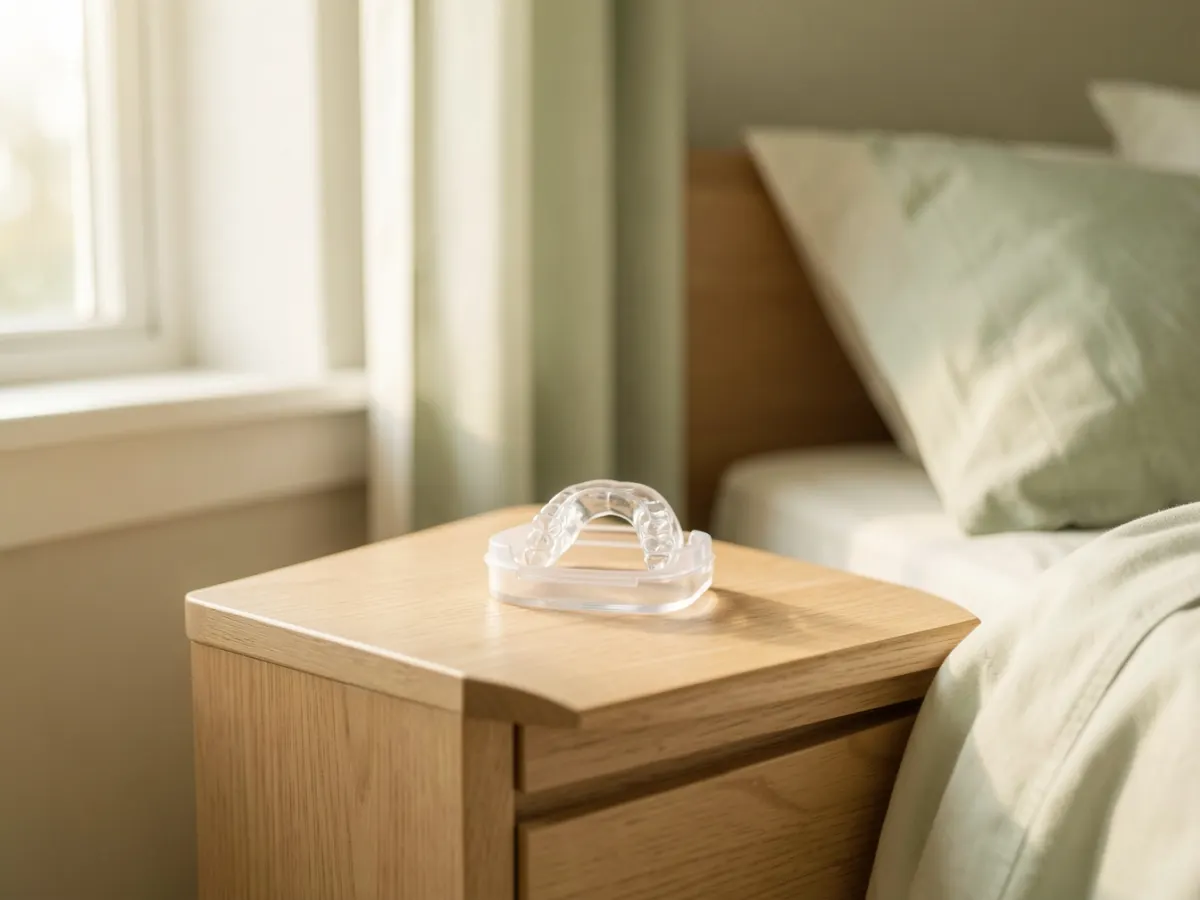
If those steps are not enough, we may add a custom night guard to protect the teeth from grinding, gentle jaw exercises, a referral to a physical therapist experienced with facial pain, or a short prescription of muscle relaxants. Treatments that permanently alter the bite, the joint or the teeth are kept for clear and narrow indications, and surgery is only considered once several specialist opinions agree it is justified. A pharmacy boil-and-bite guard may help briefly, but one that fits poorly can make things worse. Our article on night guards for grinding explains the difference a custom fit makes.
Common questions about TMJ pain
Will it settle by itself?
Often it does. Many flare-ups ease within a few weeks with self-care. If pain lasts beyond two or three weeks, wakes you at night or makes eating difficult, it is time for an exam.
Is a clicking jaw harmful?
Not in itself. A painless click is simply noisy movement. Pain, locking, or a change in the way your teeth fit together is what warrants a look.
Should I buy a guard from the pharmacy?
An over-the-counter guard can help for a short time, but it is not adjusted to your bite, and a poor fit can move teeth or aggravate muscle pain over the months. If grinding is confirmed, a custom appliance is the more predictable choice.
Does insurance cover TMJ care?
Coverage varies. Many PPO plans cover exams and imaging, and often part of an occlusal guard. Eclat is in-network with all major PPO plans, and we check your benefits before treatment so there are no surprises.
When is surgery needed?
Rarely. It is only considered after conservative care has been given a long trial, imaging shows a structural problem, and several specialists agree. Most people never reach that point.
A calm first step
If jaw pain, clicking or morning soreness has been part of your days for more than a few weeks, a careful evaluation is the natural next step. You can read more about our TMJ and jaw pain care, or call Eclat Dental Studio at (650) 917-8348. We will listen first, examine carefully, and begin with the gentlest option that suits what is going on.