Teeth Shifting Years After Braces? Invisalign for Los Altos Adults
· Eclat Dental Studio
For Los Altos adults whose teeth have drifted since childhood braces: why relapse happens, how to judge whether it matters, and how aligners are used to correct it.
A surprising number of adults who come to us about Invisalign have already been through orthodontics once. They wore braces as teenagers, were delighted with the result, and then at some point stopped wearing the retainer. Years later a front tooth has turned slightly, a gap has appeared, or the lower teeth look more crowded than they remember. This is called relapse, and it is very common. For patients in Los Altos weighing whether to do something about it, here is how we think it through.
Why straightened teeth move again
Teeth are not set in concrete. They sit in bone that remodels throughout life, held by fibres that have a kind of memory for where the teeth used to be. After braces come off, those fibres and the surrounding bone take time to adapt, and for a long while afterwards the teeth are inclined to drift back.
Even once things settle, everyday forces keep acting on the teeth: chewing, swallowing, the position of the tongue, and the gradual changes that come with age. That is why orthodontists now describe retention as lifelong. Many people who had braces a decade or two ago were given a retainer with a vaguer instruction, or the retainer was lost, broke or stopped fitting, and wear simply tapered off.
Signs that teeth have shifted
- The lower front teeth overlap more than they used to. This is often the first place relapse shows.
- A gap has opened between the upper front teeth.
- One tooth has rotated a little and catches the light differently.
- An old retainer no longer fits, or feels very tight.
- Floss snags in new places, or food catches where it never did before.
Does it need treating?
Not always. Some shifting is purely cosmetic, and if it does not bother you and the teeth are easy to clean, it may be reasonable to leave it and simply hold things where they are with a new retainer. There are good reasons to consider correcting it, though:
- Cleaning. Overlapping teeth trap plaque and are harder to floss, which raises the risk of gum inflammation and decay between them.
- Wear. When teeth move, the way they meet can change, and edges may start to chip or wear unevenly.
- Progression. Relapse rarely reverses by itself. It tends either to stay the same or slowly worsen.
Why aligners suit many relapse cases
The good news is that relapse is often milder than the original problem. The teeth were straightened once, the bite was usually corrected, and what we are dealing with is a partial drift rather than a full rebuild. Mild cases like this often finish within roughly six to nine months, although the digital plan is what sets the real estimate.
Many adults who went through fixed braces as teenagers are also reluctant to repeat the experience. Clear aligners are removable, easy to keep clean, and discreet enough for most working lives. They move teeth in small planned steps, and a digital scan lets us show you the intended finish before you commit.
Aligners are not the answer to everything. If the bite itself has changed significantly, or teeth need movements that aligners handle less predictably, a different approach may be more sensible, and we will tell you so.
What we check before starting
Moving teeth in an adult mouth calls for a little more groundwork than in a teenager's:
- Gum and bone health. Teeth should only be moved in healthy gums. If there is inflammation or bone loss, we address that first. Some shifting in adults is actually driven by gum disease, so this check matters.
- Existing dental work. Crowns, bridges and large fillings can affect how aligners grip and how teeth move.
- Old records. If you still have photos from the end of your braces, bring them. They help show how far the teeth have travelled.
Retention the second time
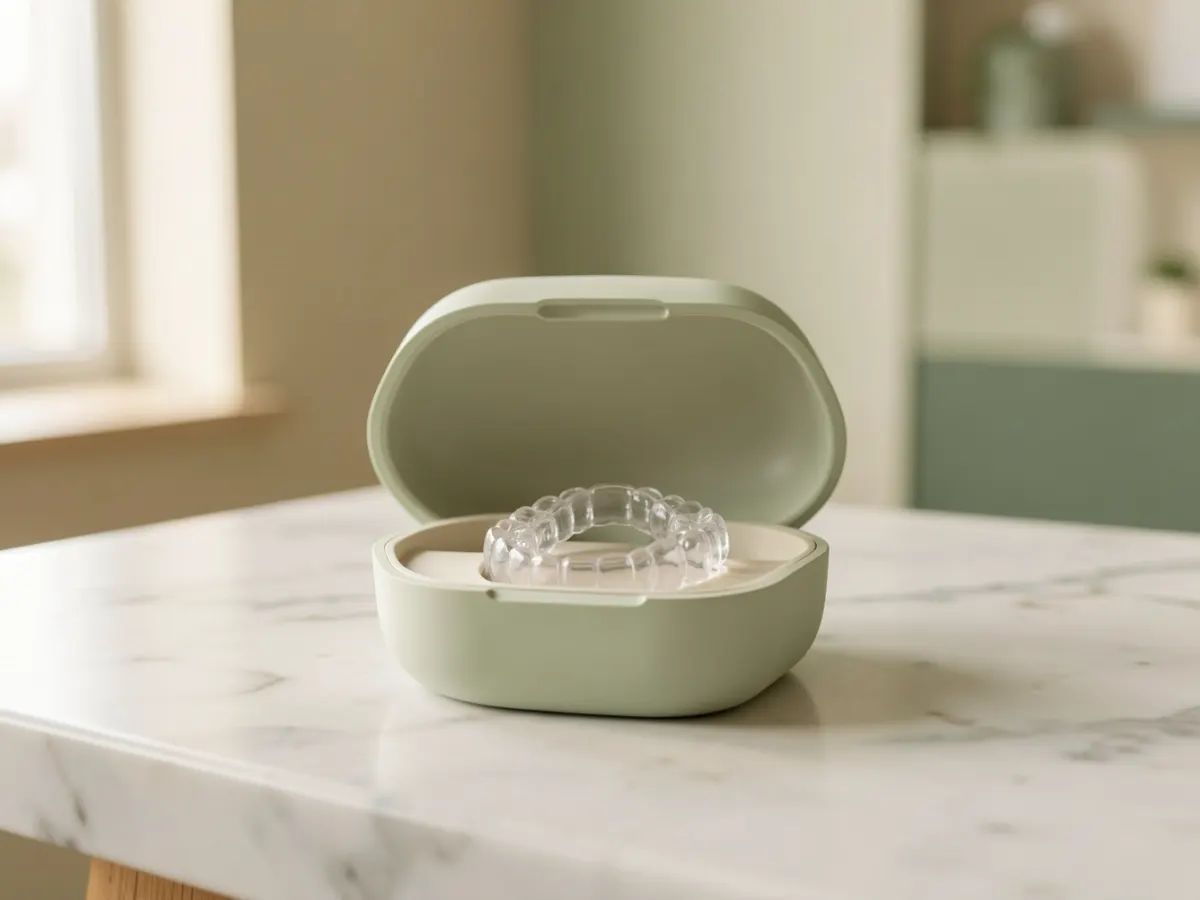
The most important part of correcting relapse is making sure it does not happen again. When treatment ends, we will talk through retainer options and a realistic wear schedule. For most people that means full-time wear for a short period and then nightly wear for the long term. Our guide to retainer care after Invisalign covers how to clean and store them, and what to do if one starts to feel tight.
A tight retainer is an early signal that teeth are moving. Wearing it more consistently for a few days often brings the fit back; if it does not, call us before a small shift becomes a larger one.
A few practical questions
How long will it take?
That depends on how far the teeth have moved. Our article on Invisalign treatment time explains the main factors, including how many hours a day the aligners are worn.
Can I just wear my old retainer again?
If it still fits comfortably, wearing it can hold teeth where they are. Forcing a retainer that no longer fits is not a good idea, and it will not reliably move teeth back.
Could veneers hide the shifting instead?
Sometimes, but covering crooked teeth usually means removing more enamel. Moving the teeth first is often the more conservative route. You can read more on our Invisalign page.
Starting with a scan
If your teeth no longer look the way they did the day your braces came off, a short consultation will tell you how much has changed and what it would take to correct. Our studio is in Mountain View, a short drive from Los Altos along El Camino Real or San Antonio Road. Call us to book a visit.