Invisalign for Teens in Menlo Park: A Practical Guide for Parents
· Eclat Dental Studio
For Menlo Park parents weighing clear aligners for a teenager: responsibility, wear time, school and sports, lost trays, and how to decide whether aligners or braces fit best.
Parents in Menlo Park often come to us with the same question: is my teenager ready for Invisalign? Clear aligners can work very well for teens, but they ask something that braces do not. The aligners come out, so the result depends on a young person putting them back in, consistently, for most of the day. This guide is written for parents who want to make that decision with clear eyes.
The honest trade-off
Braces are fixed. They keep working whether or not a teenager remembers them. Aligners are removable, which makes eating, brushing and flossing much easier and avoids the irritation of wires and brackets. The price of that freedom is responsibility. The trays need to be worn around 20 to 22 hours a day, and research on aligner outcomes consistently identifies wear time as the single biggest factor in whether treatment stays on track.
Signs a teen is ready
- They already manage their own routines, such as homework, sports kit or a phone charger, without constant reminders
- They are motivated by the result themselves, not only because a parent wants it
- They are comfortable taking aligners out and putting them back in at school
- They brush reliably, since trays worn over unbrushed teeth hold plaque against the enamel
If several of these are shaky, braces may simply be the kinder choice. There is no failure in that.
School days
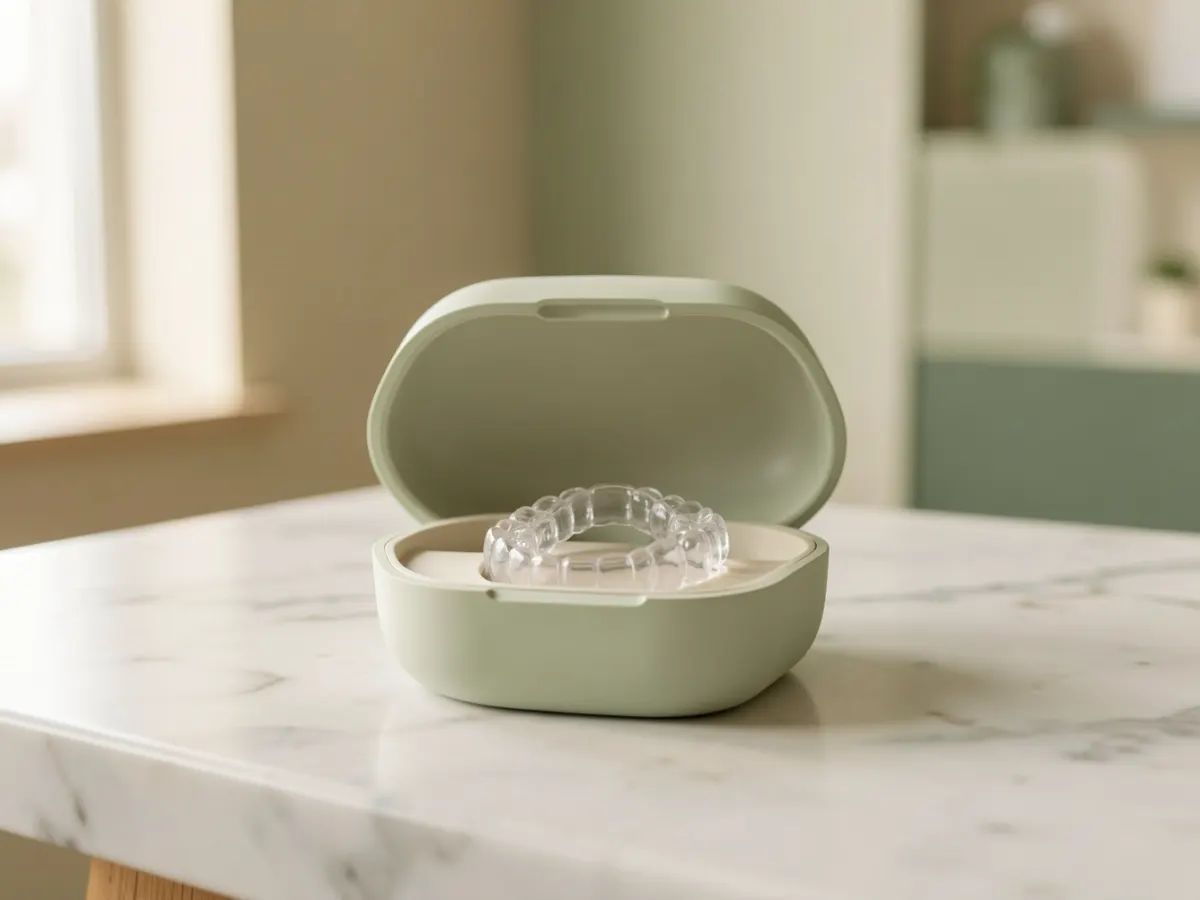
Lunch is the pinch point. Your teen will need to remove the trays, keep them in the case, eat, and ideally rinse or brush before putting them back. Aligners wrapped in a napkin on a cafeteria tray are the most common way they go missing. A spare case in the backpack helps. Snacking between classes and sweet drinks with the trays in are the habits most worth discussing early.
Sports and music
For contact sports, a mouthguard is still important. Some teens wear aligners under a guard; others remove them for the game and replace them straight after. We will advise on what suits the sport. Teens who play wind instruments usually adapt within a week or so, though the first days with new trays can feel different.
Growth works in your favour
Teenagers are still growing, and their teeth tend to move readily. That can make some corrections more straightforward than in adults. It also means that certain bite problems relate to jaw growth, and those need assessment before choosing a method. Part of the first visit is checking whether aligners alone are appropriate or whether another approach would serve better.
What happens if a tray is lost
It happens. The usual step is to wear the previous tray, or move to the next one if we advise it, and call us so we can decide how to keep things on track. Losing trays repeatedly is a signal worth paying attention to, and sometimes a reason to reconsider the approach.
How parents can help without nagging
- Agree on a simple routine together, such as trays in immediately after every meal
- Keep spare cases in the car and school bag
- Check in at progress visits rather than every hour
- Let the teen own the process, with you as backup
Keeping teeth healthy during treatment
Aligners cover the teeth, so any sugar or acid trapped underneath stays in contact with enamel longer. Water is the only drink that belongs with the trays in. Regular cleanings continue during treatment, and we check for early signs of decay or gum irritation at each visit. Our article on bleeding gums is a helpful reference if your teen notices tenderness when brushing.
The end of treatment
When the last aligner is finished, a retainer takes over. Teenagers are especially prone to skipping retainer wear once the exciting part is over, and that is when teeth start to drift back. Our guide to retainer care after Invisalign explains what long-term retention involves.
Deciding together
At a consultation we examine your teen's teeth and bite, take a digital scan, and talk openly with both of you about whether aligners or braces are the better fit. The studio is in Mountain View on Showers Drive, a short trip down El Camino Real from Menlo Park. See our Invisalign page for more, or call (650) 917-8348 to arrange a visit.